


Amid disputed claims of genocide, Trump welcomes White South African refugees to U.S.

In November, President Trump announced he would, quote, “permanently pause migration from all third world countries” to the U.S. after a member of the National Guard was killed, and another badly wounded in Washington, allegedly by an Afghan refugee. But there is one group of refugees the Trump administration is welcoming: it’s expediting the resettlement of White South Africans, mostly Afrikaners, who are descendants of Dutch settlers. President Trump says that White farmers are victims of a genocide. The South African government disputes that. We went to South Africa to see for ourselves.
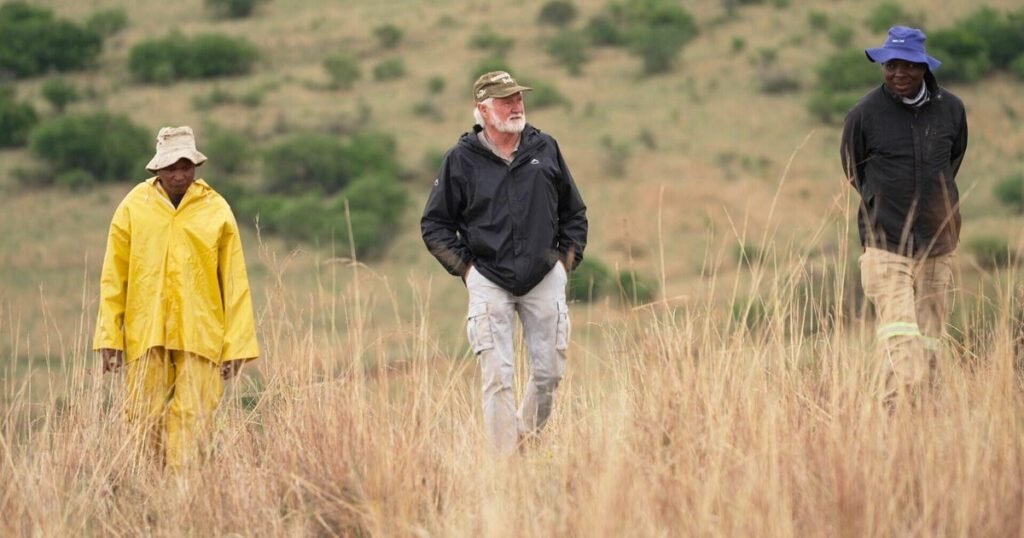
In the rolling hills of KwaZulu-Natal province in the southeast of South Africa, we met Darrel Brown, a seventh-generation rancher and farmer.
Anderson Cooper: Did you grow up knowing you would be a farmer?
Darrel Brown: It was always in my blood. It’s a calling.
But that calling has often come with risks. Ten years ago, his 82-year-old father was brutally attacked on the farm by robbers looking for guns and money. Then, in 2020, Brown’s friends Glen and Vida Rafferty, were murdered in a robbery on their farm nearby.
Anderson Cooper: Your father was attacked. You’ve had friends murdered. Do you live in fear?
Darrel Brown: I certainly live carefully. We’re aware of what’s happening around us. We don’t take silly chances.
We came to Darrel Brown’s farm because of what President Trump said last May about the murders of South African farmers.
President Trump (in May 2025): It’s a genocide that’s taking place that you people don’t want to write about, but it’s a terrible thing that’s taking place and farmers are being killed. They happen to be White.
Nine days later, South Africa’s President Cyril Ramaphosa came to the White House. Elon Musk, who was born in South Africa and has also made claims of genocide, was there, too. What happened next seemed to take Ramaphosa by surprise.
President Trump (in May 2025): Excuse me, turn the lights down.
President Trump showed several videos, proof, the White House said, of the violence targeting White farmers.
President Trump (in May 2025): These are burial sites right here, burial sites, over a thousand, of White farmers.
We found the spot where those white crosses were once planted. It’s a lonely pot-holed road not far from Darrel Brown’s ranch.
Darrel Brown: It definitely wasn’t a burial site, I mean, those crosses were there for less than 48 hours. It was purely an avenue of crosses that we planted there in honor of commercial farmers in South Africa that had lost their lives.
60 Minutes 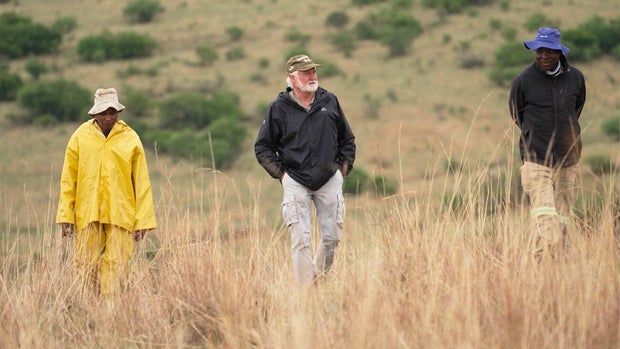
Brown knows about the crosses because he put them there on the day of his friends, Glen and Vida Rafferty’s, funeral. He keeps them locked in a shed. In 2024, he brought them out again for the funeral of his best friend, Tollie Nel, who was also murdered on his farm.
Tollie’s wife, Rene, still lives there. Her husband was killed in front of her trying to fight off burglars. Her son, Theunis, was tied up while they stole cash and guns. No one has been arrested.
Rene Nel: My whole life has changed. I’ve got nothing to look forward to. Sorry.
Theunis now runs the farm. He carries a weapon with him almost all the time.
Theunis Nel: The only time I don’t have it on me is when, is when I’m in the shower.
Anderson Cooper: Really?
Theunis Nel: Cause I don’t ever want another sit– situation to arise where I feel that I’m a victim.
The Nels have hired private security guards and fortified their property with electric fences and cameras. Many in South Africa feel they can’t rely on the country’s ineffective and overwhelmed police to keep them safe.
Anderson Cooper: When you heard President Trump talk about a genocide what did you think?
Rene Nel: Well, I just thought he was using the wrong word.
Anderson Cooper: In your opinion, it’s not a genocide here?
Rene Nel: Not what I know as a genocide. Not what I’ve heard of what a genocide is. I see our attack as a opportunistic attack. They knew there was money. They knew there were firearms.
60 Minutes 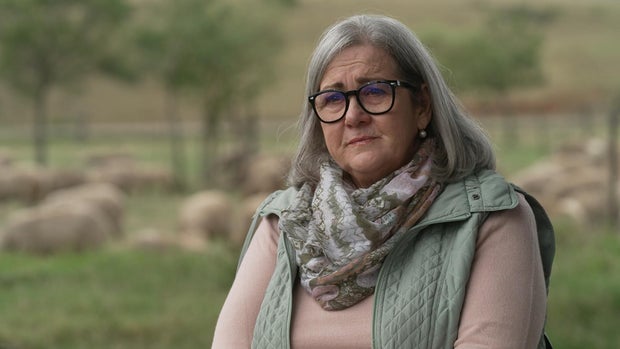
Whites make up only about 7% of the population of South Africa but still own 72% of all privately held agricultural land, and many of the country’s large commercial farms. But according to Wandile Sihlobo, a leading agricultural economist, the overwhelming number of farmers and those working on farms are Black.
Wandile Sihlobo: The White farmers may have– a bigger part of the proportion of income, but the vast majority of people operating the farms in South Africa are Black.
Anderson Cooper: There is crime on farms. There are murders on farms. They affect Black farmers as well as White farmers.
Wandile Sihlobo: They affect Black farmers as well as– as White farmers, and also farm workers who are largely Black.
Nhlanhla Zuma farmed this 9-acre plot for 20 years. He was used to having equipment stolen, but in 2024 a group of men shot at him and broke into his house.
Anderson Cooper: Did you think at the time they were gonna kill you?
Nhlanhla Zuma: 100%. 100%.
After the attack, he decided to sell the farm.
Nhlanhla Zuma: There are a lot of Black farmers that are attacked, and their voices are not out.
Anderson Cooper: People don’t pay attention.
Nhlanhla Zuma: It’s just another number, another statistic.
60 Minutes 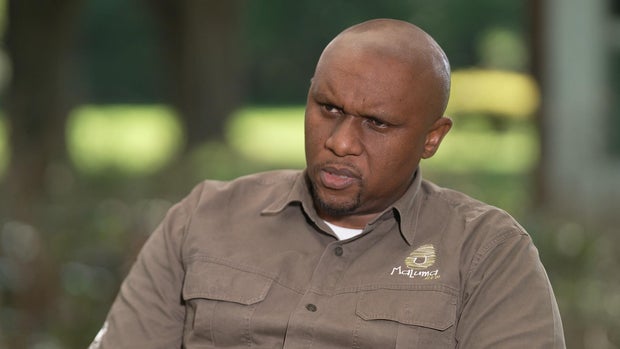
South Africa is one of the most dangerous countries in the world. The murder rate is seven times that of the United States, and the majority of victims and perpetrators are Black. According to police, more than 25,000 people were murdered here in 2024. It’s estimated 37 of them were killed on farms.
Johann Kotzé: 37 out of 25,000. For us as farmers that 37 is too much.
Johann Kotzé is an Afrikaner who is head of South Africa’s largest agricultural organization.
Johann Kotzé: It’s actually not about White genocide. It’s about criminality– in South Africa.
Anderson Cooper: That’s what’s happening on farms. It’s what’s happening in streets in Johannesburg and other major cities, it’s crime.
Johann Kotzé: It’s crime. The fact that it happened on a farm doesn’t make me special as a farmer. It’s horrendous. Any murder is horrendous.
South African police only began publishing the race of those murdered on farms under pressure last year. In the first quarter of 2025 they reported six farm homicides. Five of the victims were Black.
Johann Kotzé: Poverty is the biggest driver of crime in South Africa. And how do you solve that?
South Africa remains one of the world’s most economically unequal countries. 44% of Blacks here live in poverty compared to 1% of Whites. Kotzé went to Washington last February to talk with administration officials about the economic problems here. He was surprised by what they focused on.
Johann Kotzé: They asked us about the White genocide, and the first thing I said is, “I’m as Afrikaans as what you can get. I grew up Afrikaans. And I never witnessed that.”
South Africa’s 2.7 million Afrikaners descend from Dutch settlers who arrived on the continent 400 years ago. Every year they celebrate their culture and language in the shadow of the Voortrekker monument, which was built as a symbol of Afrikaner nationalism.
Millions of Black South Africans were forcibly evicted from their land and lost their rights to it by law in 1913. When Afrikaners took power in 1948, they instituted apartheid, a brutal system of racial segregation and discrimination. Blacks had virtually no rights and laws restricted where they could live and work.
That all changed in 1994 when Black South Africans were allowed to vote, and elected Nelson Mandela.
In the decades since there has been progress: a growing Black middle class and a reduction in poverty, but some controversial government efforts to redress inequalities have been plagued by graft and cronyism.
White supremacists in the U.S. and elsewhere have long portrayed Afrikaners as victims of discrimination, and worse, genocide. But those claims didn’t go mainstream until 2018, when then-Fox news host Tucker Carlson began alleging Afrikaner farmers were being killed and having their land seized.
Tucker Carlson: An embattled minority of farmers, mostly Afrikaans speaking, is being targeted in a wave of barbaric and horrifying murders…
President Trump then tagged Tucker Carlson in a tweet saying there were “large scale killings of farmers” in South Africa and the government was “now seizing land from White farmers.”
Anderson Cooper: Are there large-scale killings of farmers? And–
Max du Preez: There’re not.
Anderson Cooper: Is the government seizing land?
Max du Preez: It is not happening. Donald Trump was fed this information, this link: farm murders, genocide. There is no such a thing.
60 Minutes 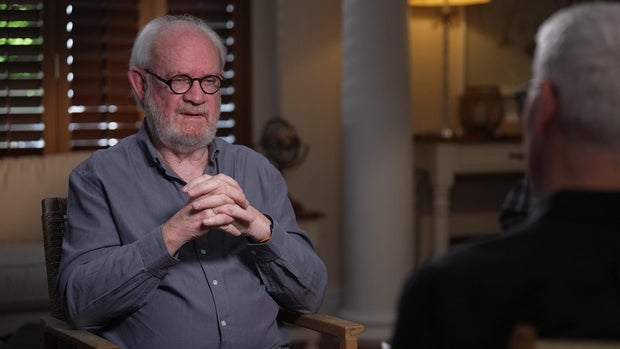
Max du Preez is a prominent Afrikaans journalist and former newspaper editor.
Anderson Cooper: Are you the victim of unjust discrimination?
Max du Preez: I’ve never been discriminated against. And I’m a loud-mouthed citizen because I’m a journalist, so I express myself very strongly, also against this inept, corrupt government.
Discrimination is outlawed under South Africa’s constitution, which also protects property rights and due process. But in January last year, the South African parliament approved a land Expropriation Act, which critics say violates that constitution.
The government compares the Expropriation Act to eminent domain in the United States, which allows it to buy private land for public use. What’s different is that South Africa’s Expropriation Act, could, in some cases, allow the government to take land without compensation, and not just for public use, but to redress past discriminatory laws. Landowners have the right to fight back in court, but that might take years.
The Expropriation Act isn’t in effect yet, and it’s being challenged in court by South Africa’s second largest political party, and by Kallie Kriel, the CEO of the Afrikaner rights group AfriForum, who has repeatedly traveled with others to Washington to lobby for support.
Kallie Kriel: There is a serious threat to property rights. There is a serious threat to the lives of– of farmers. And that needs to be recognized.
Anderson Cooper: Are White farmers being killed for their land?
Kallie Kriel: Yes. I believe so.
Anderson Cooper: Is there a White genocide going on in South Africa?
Kallie Kriel: We’ve never used the term White genocide. We’re saying there are tortures. People are being murdered. We are seeing a call for genocide.
The call for genocide Kriel is talking about is this song, “Kill the Boer, Kill the Farmer,” which President Trump played a video of in the Oval Office in May. In the 1980s and 90s, it was sung at protests against apartheid and is still used at rallies by the man singing, Julius Malema, a race-baiting opposition politician who wants the government to seize White-owned land.
60 Minutes 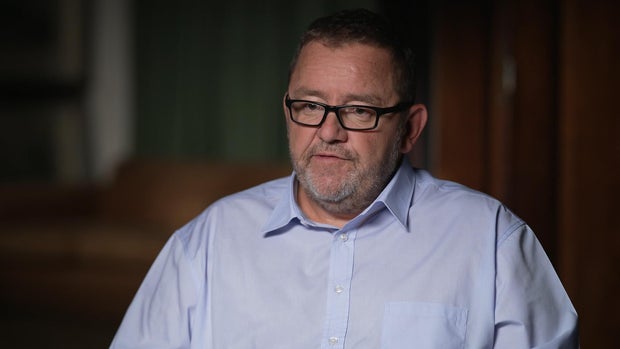
Kallie Kriel: You know what the rhetoric is, is that we hear the same people that chant “Kill the Boer, Kill the Farmer,” use the narratives to try and portray Afrikaners and farmers as thieves.
Anderson Cooper: Has any farmer had their land taken in the last 30 years of Black rule here in this country without compensation or without having redress through courts?
Kallie Kriel: Because the legislation did not allow it. The new legislation allows it.
President Trump cited the Expropriation Act in his Executive Order last February cutting off all aid to South Africa and allowing for the “resettlement of Afrikaner refugees escaping government sponsored race-based discrimination.”
The first group of 59 Afrikaner refugees arrived in May. Now, almost 2,000 are here.
Anderson Cooper: Did you ever imagine that virtually the only group of refugees gonna be allowed in the U.S. would be White Afrikaners?
Max du Preez: That shows up the complete absurdity of– of this Afrikaner refugee thing, because they’re saying these White Afrikaner refugees, their lives are more important than the bona fide refugees from– everywhere else in the world that wants to come there. They’re saying White lives are worth more than other lives.
Remember Darrel Brown, the farmer who organized the protest with the white crosses? He says he won’t be packing his bags to become a refugee in America anytime soon.
Darrel Brown: I’m an African, I’ve been burnt by the African sun, and I’m not going anywhere.
Anderson Cooper: There’s a lotta sun in Florida.
Darrel Brown: I’m very positive about South Africa. This is my home.
Produced by Michael H. Gavshon and Nadim Roberts. Broadcast associate, Grace Conley. Edited by Mike Levine.
You may be interested

Christopher Nolan imagines every movie is the last he’ll ever make
new admin - May 18, 2026Christopher Nolan directed this summer's "The Odyssey" as if it would be the last movie he ever made, as he…

Anderson Cooper’s emotional farewell to 60 Minutes after 20 years
new admin - May 17, 2026For more than 20 years, Anderson Cooper has traveled the world for 60 Minutes in pursuit of stories that revealed…

5/17: Face The Nation – CBS News
new admin - May 17, 2026This week on "Face the Nation with Margaret Brennan," as President Trump returns from his trip to China, U.S. Trade…