



America is at risk of becoming an automotive backwater

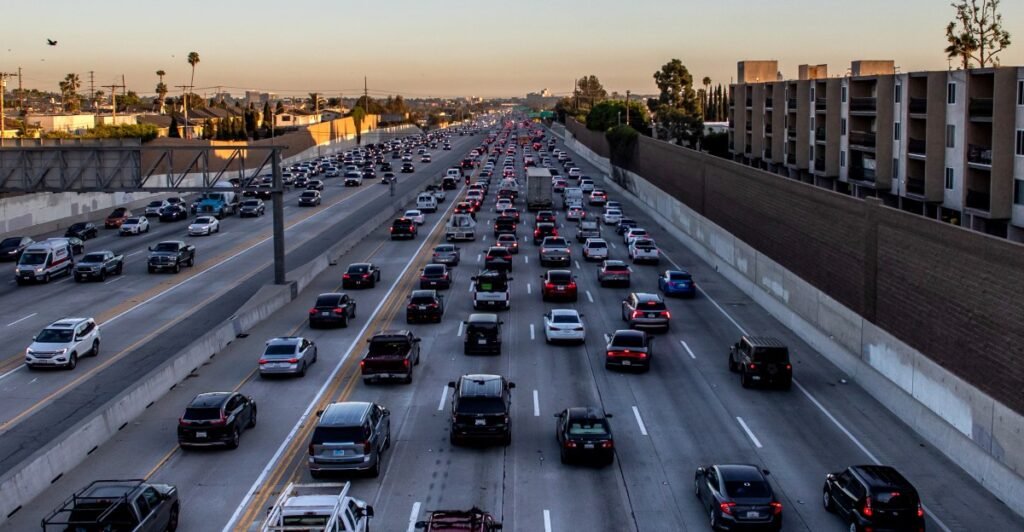
For decades, America’s auto industry was the envy of the world, driven by mass production, the rise of Detroit’s Big Three automakers, and the iconic stylings of the 1950s and ’60s.
Then, through a series of blunders and missteps, things started to unravel. There was the fuel crisis of the 1970s, which led to an influx of Japanese imports that bested Detroit in fuel savings and reliability. And then there were various global financial collapses throughout the 1990s and early 2000s, and a significant decline in automotive quality as the Big Three continued to push bigger and more expensive vehicles, at the expense of road safety and global competitiveness.
And then there was, for lack of a better term, the great EV whiff of the 2010s and 2020s. After sleeping on electric vehicles for too long, the Big Three finally got in the game — but they botched it, rolling out a series of electric versions of gas cars that lacked the finesse or gee-whiz software tricks of Tesla. They were also too expensive for most Americans.
And now the real financial fallout begins. Ford announced a $19.5 billion write-down on its EV investments — one of the largest in corporate history. On the same day, the Blue Oval said it was killing the F-150 Lightning, a vehicle once heralded as the return of the Model T. General Motors came next, with a $7.6 billion charge. And then Stellantis, with a colossal $26.6 billion hit on its EV investments.
Cumulatively, that’s over $50 billion gone. Poof.
How did the US get EVs so wrong? The lazy answer is that Americans just don’t want them, preferring to keep pumping dead dinosaur sludge into their lifted Ford F-150s and not have to deal with all that charging. But the real reason is that Detroit never took the challenge seriously, while dealers actively worked against the transition, worried about losses in service and repair. And then President Donald Trump turned EVs politically toxic, and here we are. Americans are now falling behind in what may be one of the most significant technological shifts since the first car rolled off the assembly line.
Cumulatively, that’s over $50 billion gone. Poof
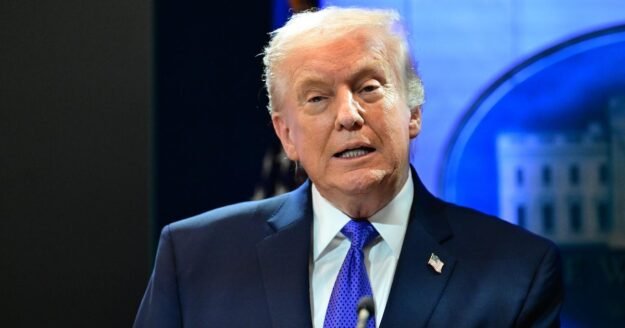
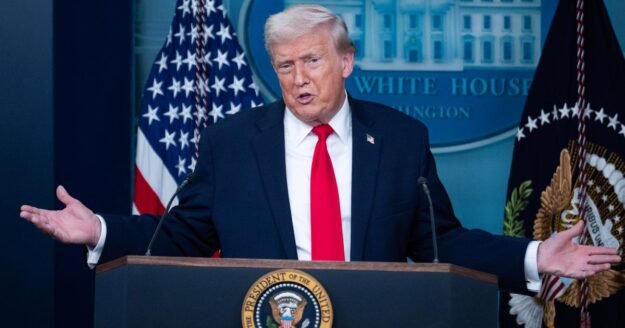
As such, Trump seems happy to accelerate the auto industry’s rush toward irrelevance. Along with Congressional Republicans, Trump eliminated the $7,500 EV tax credit, right when the market was finding its footing. GM’s EV sales dropped 43 percent in the quarter right after the tax credit ended.
The Trump administration has also rolled back emissions regulations that were designed to push automakers to build more EVs and challenged California’s authority to set its own pollution limits. And then, earlier this month, the real kill shot: Trump’s EPA rescinded the landmark “endangerment finding” that greenhouse gas emissions endanger human health — the foundation of the agency’s vehicle-pollution rules first adopted in 2010.
Automakers will no longer face fines for exceeding fuel emissions standards, nor will they have to buy pricey climate credits from Tesla and other EV makers. They have free rein to pollute.
“The US no longer has emissions standards of any meaning,” Margo Oge, who served as the EPA’s top vehicle emissions regulator under three presidents and has since advised both automakers and environmental groups, told The New York Times. “Nothing. Zero. Not many countries have zero.”
There are other ways of looking at this. Without emissions standards or the endangerment finding looming over them, automakers will have some “breathing room” to continue to churn out big, gas-guzzling trucks and SUVs that help pay the bills, while also hopefully continuing to fund R&D efforts to design better, more efficient, and most importantly profitable electric vehicles, said Ivan Drury, director of insights at Edmunds.
“Hopefully, they’ve learned their lesson and don’t allow this breathing room to be their gas chamber,” he added.
“Hopefully, they’ve learned their lesson and don’t allow this breathing room to be their gas chamber.”
— Ivan Drury, director of insights at Edmunds
As the US backslides, the rest of the world is already transitioning to electric power. In 2025, people bought a record 20.7 million EVs worldwide, up from just three million in 2020. In a number of nations, EVs represent a significant portion of overall auto sales: 20 percent in South Korea; 50 percent in China; 68 percent in Denmark; 65 percent in Sweden; and 96 percent in Norway. In the US, EV sales were roughly 10 percent.
How’d they do it? Sustained investment in battery technology, charging infrastructure, and affordable models. That’s it, really. China is estimated to have spent between $150 billion and $250 billion on EV development, raw materials, and everything else, and now the country’s auto industry is on the cusp of taking over the world. Well, the world minus the US, where tariffs and restrictions on Chinese software have kept BYD, Xiaomi, and others from coming in and decimating the Big Three.
Just as the pendulum has swung against EVs, it could certainly swing back. California is challenging the move by Congressional Republicans to revoke its waiver to enact its own emissions regulations. If it wins, automakers could find themselves stuck between the pro-EV California and the anti-EV Washington.
This will likely force automakers to continue to develop multiple powertrains — ICE, hybrid, EV — for longer than they would have preferred, said Ed Kim, president and chief analyst at AutoPacific. If Ford, GM, and Stellantis want to continue to compete globally — hell, if they want to continue to survive, and not get completely taken out by China — they will need to ignore the regulatory impulse to abandon EVs altogether and keep trying to crack the code.
Ford says it’s committed. Mary Barra at GM too. Stellantis is in a tougher spot, but has yet to completely throw in the towel. European, Japanese, and Korean automakers will have a role to play too. The EV transition isn’t defeated. It’s winning all across the globe, just not in America. Not yet.
You may be interested

The best e-reader for 2026
new admin - Feb 20, 2026Any ebook reader will let you cram a Beauty and the Beast-sized library’s worth of books in your pocket, but…
SCOTUS rules Trump’s tariffs are illegal — but the fight is far from over
new admin - Feb 20, 2026The US Supreme Court struck down some of Donald Trump’s tariffs on foreign imports, which have become a hallmark of…

American Alex Ferreira wins his first Olympic gold in freeski halfpipe
new admin - Feb 20, 2026Over a decade of trying and getting oh-so-close, American freeskier Alex Ferreira twirled his pole above his head knowing that…