


Ed Department Weaponizes FERPA to Restrict Voting (opinion)

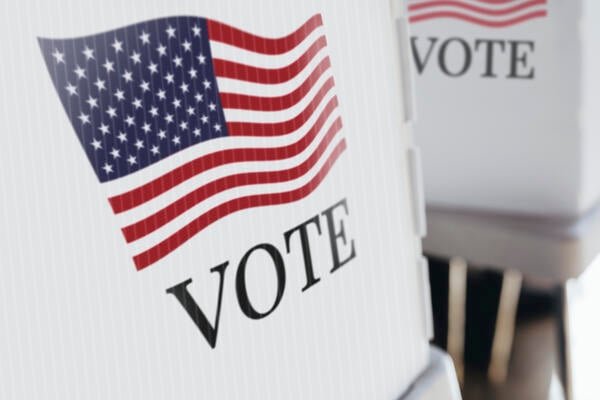
Earlier this month, the U.S. Department of Education sent a letter to every college and university president with the goal of continuing its efforts to curb voting among college students. This latest letter threatens colleges and universities if they participate in or use the data from the National Study of Learning, Voting and Engagement, claiming that if they do so, they “could be at risk of being found in violation of FERPA.”
The Family Educational Rights and Privacy Act is the federal law that protects the privacy of student education records and applies to any institution that accepts Department of Education funds. Like many of this administration’s actions, this letter is designed to have a chilling effect, since no determination has been made by the department that participation in, or use of, NSLVE studies violates any privacy statutes.
In existence since 2013, with more than 1,000 colleges and universities nationwide currently choosing to participate, the NSLVE is a study of student political engagement at higher education institutions. The NSLVE uses data that colleges and universities voluntarily provide to the National Student Clearinghouse, which matches student enrollment records with public voting files to determine whether students registered to vote and whether they voted—not whom they voted for. NSLVE, which is housed at Tufts University, then uses the de-identified data it receives to send a confidential report to participating campuses about their own students’ voting participation.
Under the guise of protecting student privacy, the Department of Education is weaponizing FERPA to try to get to the Trump administration’s goal of weakening voter participation, especially among college students, for political reasons. Secretary of Education Linda McMahon herself stated in the press release announcing the new guidance that “American colleges and universities should be focused on teaching, learning, and research— not influencing elections.” And the department admits in its guidance letter that its assessment that NSLVE is in violation of FERPA is based on a “preliminary analysis” and that ED merely has “concerns” about NSLVE’s use of data. The department does not conclude that NSLVE or the use of the NSLVE data violates any laws, including privacy laws.
The NSLVE primarily uses directory information—name, address and date of birth—which institutions may disclose without consent as long as they have given general public notice (including notice of the option to opt out of disclosure) at the beginning of the academic year. In addition, when other information is provided—such as gender, race/ethnicity and degree-seeking status—it is allowable because it falls under FERPA’s “studies exception.”
This exception allows information to be shared for studies that “improve instruction.” The NSLVE’s research is designed to enable colleges to improve civic education on campus—something that is a stated goal of this administration. Furthermore, NSLVE reports do not contain individually identifiable information and are only shared with the institution itself. It is for these reasons that the Department of Education, since the program’s inception more than a decade ago, has found this work to be allowable under FERPA.
It is critical for colleges to understand what this letter is saying—and what it isn’t. Students deserve to have their data protected, and the federal government has a critical role to play in safeguarding their data. It is the Department of Education’s obligation to use its resources to do so. It is paramount that the government ensures any actions taken by institutions put student privacy first. But alleging potential student privacy violations when there are none is a waste of resources and undermines what is really at stake.
As recognized by the Higher Education Act’s requirement that higher education institutions provide voter registration forms to all their students, colleges have an important role to play in promoting civic engagement and participation in democracy among students. As long as they are doing it in a way that is compliant with the data sharing allowed in FERPA, the federal government must not interfere with colleges’ participation in the NSLVE— especially with threats that are not backed up with legal findings. Insights from the NSLVE are critical to strengthening nonpartisan civic engagement for college students. Restricting use of the data in an election year is not about protecting students—but instead is harmful to them and to our democracy.

You may be interested

Dusk bedding set with ‘sophistication to rivals big brands’ now £20
new admin - Feb 20, 2026The simplest and most effective method of refreshing your bedroom is investing in new bedding - and it needn't cost…
31 Colleges Agree to End Partnerships With PhD Project
new admin - Feb 20, 2026[ad_1] The PhD Project aimed to support underrepresented students who are pursuing a doctoral degree in business. But ED said…

Tornadoes hit Indiana, Illinois as destructive storms blast through parts of Midwest
new admin - Feb 20, 2026Destructive storms blasting through parts of the Midwest spawned tornadoes that hit Indiana and Illinois, as near-hurricane force winds swept…