



NASA’s new chief rebukes Boeing, space agency over problem-plagued Starliner mission that left astronauts stuck in space for months

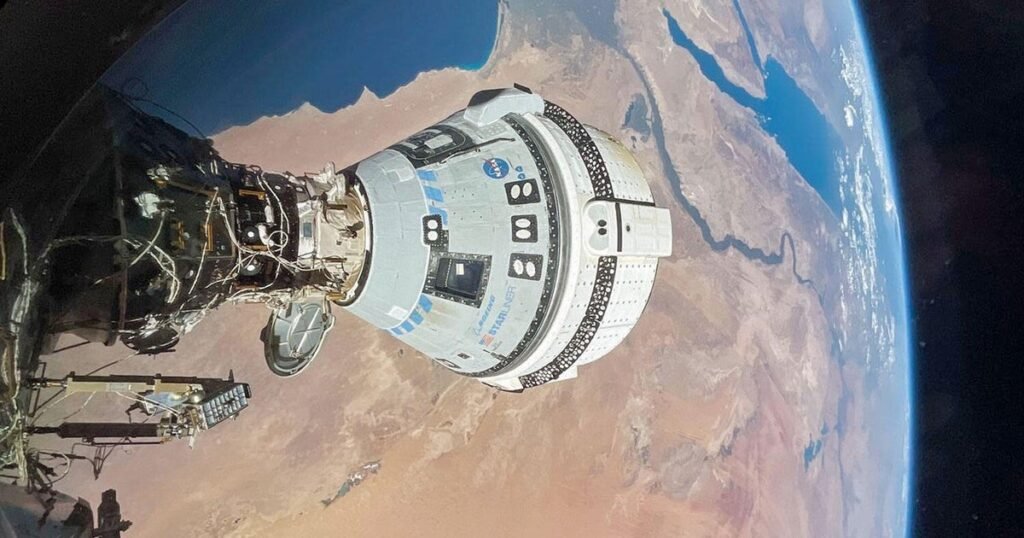
An independent review of the first — and so far, only — piloted flight of Boeing’s troubled Starliner spacecraft concluded that the test represented a potentially life-threatening “Type A” mishap resulting from multiple technical problems and management miscues, NASA officials said Thursday. The findings prompted NASA’s new chief to make openly critical comments about his own agency and Boeing.
“This was a really challenging event and…we almost did have a really terrible day,” said Amit Kshatriya, NASA associate administrator. “We failed them.”
NASA 
He was referring to now-retired astronauts Barry “Butch” Wilmore and Sunita Williams, who were launched in June 2024 expecting to spend eight to 10 days in space. They ended up remaining in orbit for 286 days, hitching a ride home aboard a SpaceX Crew Dragon capsule in March 2025 after NASA ruled out landing aboard the Starliner.
NASA Administrator Jared Isaacman, who took the reigns of the agency in December, said NASA will continue working with Boeing to make the Starliner a viable crew transport vehicle, adding that “sustained crew and cargo access to low Earth orbit will remain essential, and America benefits from competition and redundancy.”
“But to be clear, NASA will not fly another crew on Starliner until technical causes are understood and corrected, the propulsion system is fully qualified and appropriate investigation recommendations are implemented,” he said.
He made the comments as the agency was releasing the results of a months-long independent investigation of the Starliner mission. The panel’s report cited a long list of management failures and technical issues that were not fully understood at the time, but were still considered acceptable for flight.
The panel concluded the problems experienced during the mission were representative of a “Type A mishap,” meaning an unexpected event that could have resulted in death or permanent disability, damage to government property exceeding $2 million and the loss of a spacecraft or launch vehicle.
Isaacman said the eventual cost of the Starliner’s woes exceeded the $2 million threshold “a hundred fold.”
“Starliner has design and engineering deficiencies that must be corrected,” he said. “But the most troubling failure revealed by this investigation is not hardware. It’s decision-making and leadership that, if left unchecked, could create a culture incompatible with human space flight.”
NASA 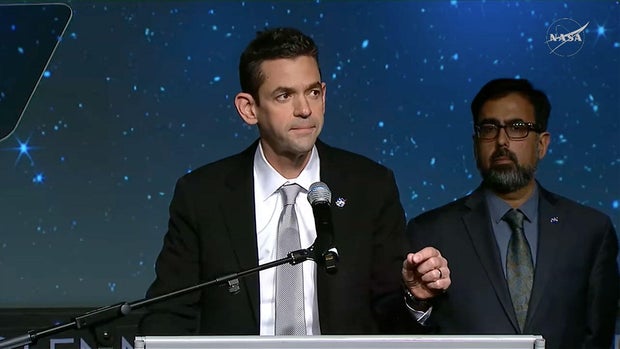
Isaacman said the investigation revealed pressure within NASA to ensure the success of the agency’s Commercial Crew Program, which is based on having two independent astronaut ferry ships. That advocacy “exceeded reasonable bounds and placed the mission the crew and America’s space program at risk.”
“This created a culture of mistrust that can never happen again and there will be leadership accountability,” Isaacman said.
The report quoted unnamed personnel saying things like, “There was yelling in meetings. It was emotionally charged and unproductive.”
Another said, “If you weren’t aligned with the desired outcome, your input was filtered out or dismissed.”
Yet another told the panel, “I stopped speaking up because I knew I would be dismissed.”
Equally troubling, according to one NASA worker quoted in the report, “NASA wasn’t blaming Boeing, but everybody else was. […] You know, it’s our program. We’re responsible too. Nobody said that. And nobody within NASA [or outside of NASA] has been held accountable. Nobody. We’re 11 months after it happened, and there’s been no accountability at all, from any organization.”
Isaacman promised that “lessons will be appropriately learned across the agency and there will be accountability.”
In the wake of the space shuttle’s retirement in 2011, NASA awarded multi-billion-dollar contracts to Boeing and SpaceX in 2014 to build independent ferry ships to carry astronauts to and from the space station. SpaceX, awarded an initial $2.6 billion contract, has now launched 13 piloted Crew Dragon flights for NASA and seven purely commercial missions.
NASA 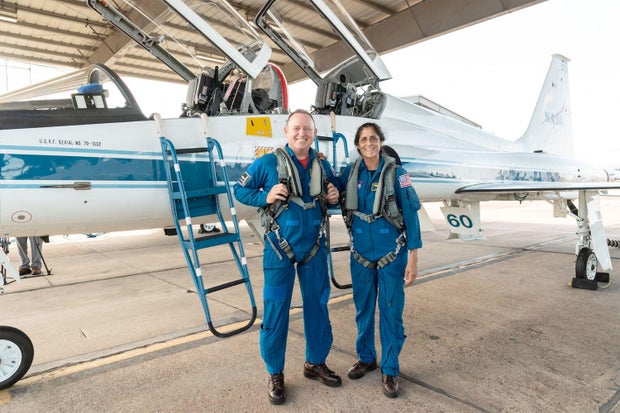
In contrast, Boeing, awarded an initial $4.2 billion contract, ran into multiple problems during an unpiloted Starliner test flight in 2019 that eventually required a second crew-less test flight before Wilmore and Williams were finally launched on June 5, 2024, on what has been the ship’s lone crewed test flight.
The trip to space atop a United Launch Alliance Atlas 5 rocket went smoothly and the crew successfully docked with the International Space Station the next day. But the capsule experienced multiple helium propulsion system leaks along the way and several maneuvering jets did not produce the expected thrust.
“During the rendezvous and proximity operations, propulsion anomalies cascaded into multiple thruster failures and a temporary loss of six-degree-of-freedom control,” Isaacman said Thursday. “The controllers and the crew performed with extraordinary professionalism … and docking was achieved.
“It is worth restating what should be obvious,” he said. “At that moment, had different decisions been made, had thrusters not been recovered or had docking been unsuccessful, the outcome of this mission could have been very different.”
Williams and Wilmore downplayed the malfunctions during the flight, which was originally expected to last about eight days. But NASA and Boeing ended up extending their stay in orbit, carrying out weeks of tests and analysis to determine whether the Starliner could be trusted to safely bring its crew back to Earth.
By August 2024, Boeing managers were convinced engineers understood the problems and the crew could safely come home in the Starliner. But NASA managers ruled that option out. Instead, they decided to keep the astronauts aboard the station until early 2025 when they could hitch a ride back to Earth aboard a SpaceX Crew Dragon ferry ship.
To make that possible, a Crew Dragon was launched in September 2024 with just two astronauts aboard instead of four as originally planned. That freed up two seats for Wilmore and Williams after the SpaceX crew completed their six-month stay in space.
The Starliner, meanwhile, successfully made an uncrewed return to Earth in September 2024 even though, the investigation report revealed, additional propulsion problems left the craft with no available backup options had another failure occurred.
The mission, “while ultimately successful in preserving crew safety, revealed critical vulnerabilities in the Starliner’s propulsion system, NASA’s oversight model and the broader culture of commercial human spaceflight,” the investigation team concluded.
The panel issued 61 formal recommendations “across technical, organizational, and cultural domains to address these issues before the next crewed Starliner mission.”
“The report underscores that technical excellence, transparent communication, and clear roles and responsibilities are not just best practices, they are essential to the success of any future commercial spaceflight missions,” the team said. “The lessons from CFT must be institutionalized to ensure that safety is never compromised in pursuit of schedule or cost.”
For its part, Boeing said in a statement the company had made “substantial progress” on corrective actions “and driven significant cultural changes across the team that directly align with the findings in the report.”
“NASA’s report will reinforce our ongoing efforts to strengthen our work…in support of mission and crew safety, which is and must always be our highest priority. We’re working closely with NASA to ensure readiness for future Starliner missions and remain committed to NASA’s vision for two commercial crew providers.”
You may be interested
Tornadoes hit Indiana, Illinois as destructive storms blast through parts of Midwest
new admin - Feb 20, 2026Destructive storms blasting through parts of the Midwest spawned tornadoes that hit Indiana and Illinois, as near-hurricane force winds swept…
How One College Teaches Students Compassion
new admin - Feb 20, 2026[ad_1] Cris Tietsort was invited into a political science course at the University of Denver to talk to students about…

Get Princess Kate’s heart necklace style for less before Mother’s Day
new admin - Feb 20, 2026Known for her chic outfits, items worn by Princess Catherine often sell fast. It isn't just the royal's clothing that…