



How “signal sniffer” technology is being used in the search for Nancy Guthrie

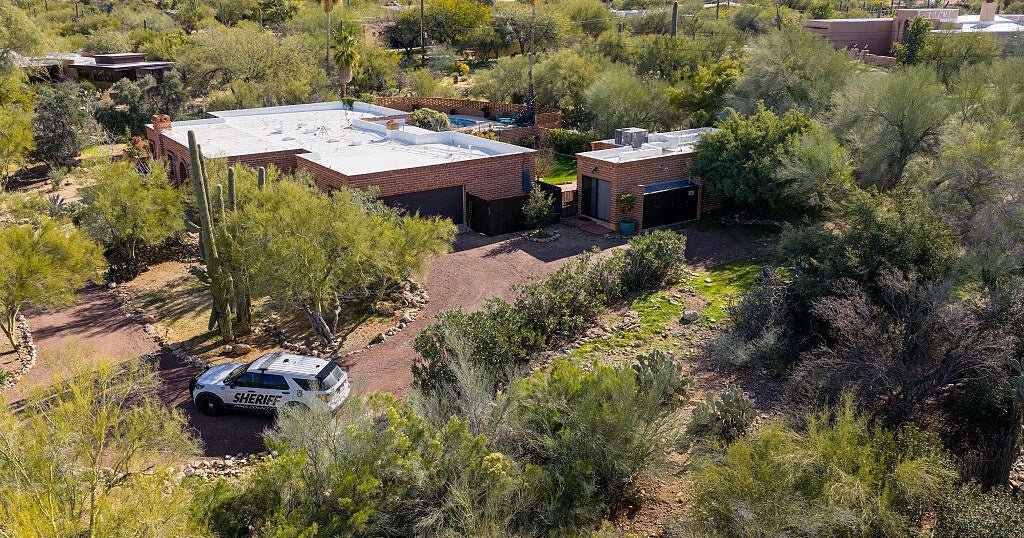
Investigators are using a tracking device called a “signal sniffer” that can detect signals emitted from electronic devices as the search for Nancy Guthrie continues in its third week.
David Kennedy, a former NSA hacker and inventor of the signal sniffer being used in the investigation, told CBS News that because Guthrie’s pacemaker was disconnected from the app on her phone, it indicates the device is equipped with Bluetooth Low Energy technology, a power setting designed so the device will last multiple years.
Nancy Guthrie, the 84-year-old mother of “Today” show co-host Savannah Guthrie, was reported missing when she failed to show up for church on Feb. 1, after vanishing in the middle of the night from her home in Tucson, Arizona, in an apparent abduction. Authorities said Guthrie’s pacemaker was disconnected from the pacemaker app on her cellphone at 2:28 a.m.
Kennedy said Bluetooth Low Energy only has a 10- to 15-foot radius, but with signal amplifiers and high-gain antennas, the radius can extend to several hundred feet.
He said after conducting a test at his home using a non-commercial drone and off-the-shelf items to modify it, he was able to extend the device’s detection range to about 800 feet.
“With amplification, with the ability to deploy things like drones or leveraging helicopters, they should be able to cover a lot larger area and then really home in just from a few meters to the actual signal itself,” Kennedy told CBS News.
Since the pacemaker sends out a Bluetooth signal every two to three minutes, the signal sniffer can pick up its location, Kennedy said, which law enforcement would be able to view and trace using Nancy Guthrie’s phone.
The tracking tool was mounted on a helicopter on Monday, law enforcement sources told CBS News. The helicopter carrying the device was flying slowly at a low altitude over the area where investigators are still hoping to find Guthrie, the sources said.
Kennedy said he believes the helicopter was used as a quick stopgap to get a general location to see what was happening in the area. He said a signal sniffer could be fixed to a drone or a car, though a drone is more efficient because it can cover greater distances faster, and that using a helicopter or car could interfere with the signal due to metal buildings or concrete walls.
Since signal sniffers are considered a new capability for law enforcement, Kennedy said officials don’t have massive fleets of drones being used, and that it will take time to build out the infrastructure to do so. He said if there were around 50 to 60 drones covering 300 to 800 feet, it would speed up the process.
“You can really cut that time down pretty substantially across the board, you’re probably talking, a day or a few days or a maximum of two weeks of being able to cover 120-foot-mile radius, to be able to actually identify it,” Kennedy said. “It really comes down to manpower, drone operators [and] the drone technology itself.”
You may be interested
The roller coaster popularity of plastic surgery
new admin - Aug 22, 2026Watch CBS News A new piece in The Free Press looks at the roller coaster popularity of plastic surgery. Freya…

Dolly Parton Shares New Health Update With Fans
new admin - Aug 22, 2026[ad_1] Dolly Parton shared an update on Friday amid ongoing health issues following the death of her husband, Carl Dean,…
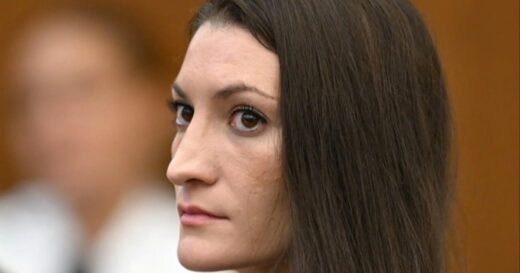
Psychiatrist who helped get Andrea Yates acquitted testifies in Clancy trial
new admin - Aug 22, 2026Dr. Phillip Resnick, whose testimony contributed to an acquittal in another high-profile child-killing case in 2001, testified in Lindsay Clancy's…