

Documenting the horrors of Mauthausen concentration camp

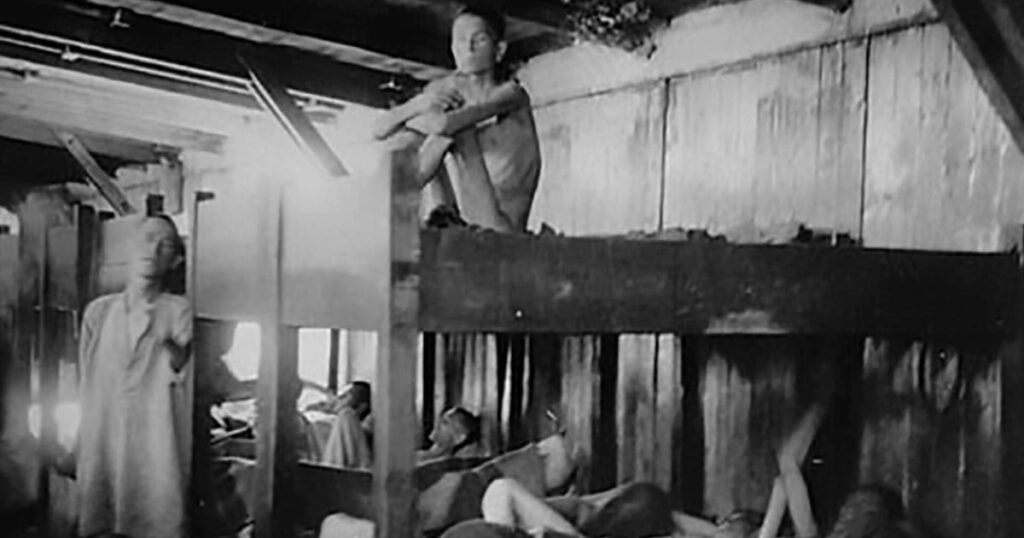
In late April 1945, as World War II neared its end in Europe, three newborn babies and their mothers arrived at the notorious Mauthausen concentration camp in Austria. The women, Jewish prisoners who had endured months of forced labor, had hidden their pregnancies from their Nazi captors. Their survival to that point was extraordinary; what happened next was something closer to miraculous.
Less than a week after their arrival, a small American unit of roughly two dozen soldiers liberated the camp. Among the liberating soldiers was 22-year-old Army medic LeRoy “Pete” Petersohn of Illinois.
Petersohn had worked at a newspaper before the war. When he entered Mauthausen, he found himself confronting horrors that he felt were almost beyond comprehension. He also understood that what he was seeing needed to be documented to be believed.
“This is a story as I witnessed upon arriving here about two weeks ago,” he wrote in a letter dated May 20, 1945.
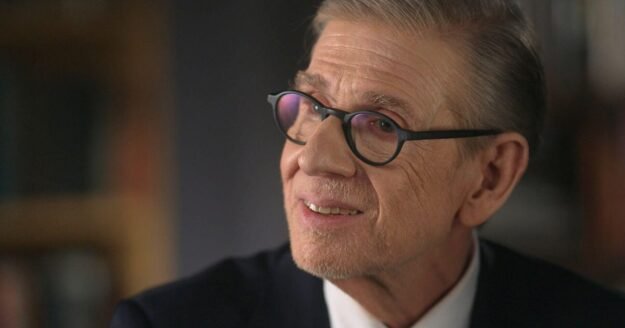
His son, Brian Petersohn, recently read those words aloud to 60 Minutes correspondent Lesley Stahl. The letter was not just a message home; it was testimony.
“It was a terrible sight upon arriving here,” Petersohn wrote, describing “piles after piles of dead bodies.” He recounted how starving prisoners, once the gates were opened, ran to patches of grass and began eating it. “The sights were horrible,” he wrote. “The camp was almost beyond a human being to stand.”
He described prisoners lying against the walls. “We figured they were just resting, but no, they were also dead and had been dead for hours. My blood runs cold when I recall these sights, which I witnessed.”
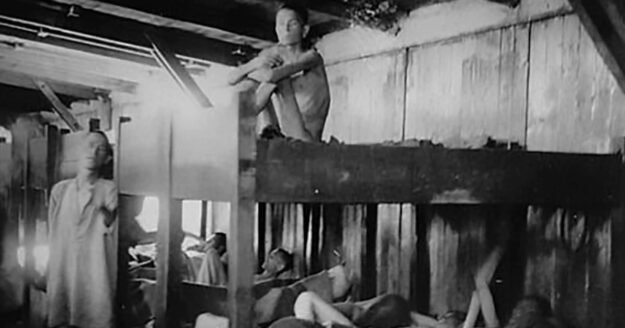
In addition to his written report, Petersohn and his fellow soldiers took photographs and recorded film footage of what they found at Mauthausen in the days after liberation.
Brian Petersohn says his father understood that history would require proof. He recalled conversations about the role of General Dwight D. Eisenhower, who ordered troops to bring local civilians to see the camps firsthand and to document what they found through words and images.
Petersohn did exactly that. He sent the letter home to his wife, who brought it to the local newspaper, where it was published as contemporaneous evidence of what American soldiers had encountered.
“He was giving testimony,” Stahl observed.
Brian agreed.
When asked whether he considers his father a hero, Brian paused.
“I’m going to say yes,” he said of his father, who died from a brain tumor in June 2010. “But then again, I know how humble he was — that it was just what he was supposed to do. It was his job.”
Photos and videos courtesy of the U.S. Holocaust Memorial Museum and Getty Images.
The video above was produced by Shari Finkelstein, Collette Richards, and Brit McCandless Farmer. It was edited by April Wilson and Scott Rosann.
You may be interested

NASCAR news: Michael Jordan’s driver wins Daytona 500
new admin - Feb 16, 2026[ad_1] NEWYou can now listen to Fox News articles! The 2026 Daytona 500 proved once again that it’s the last…
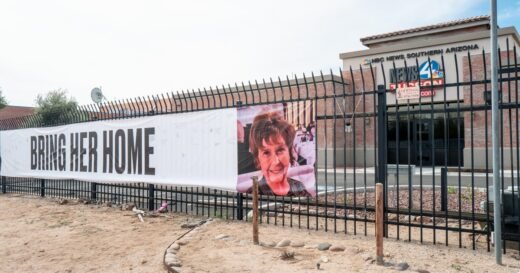
Savannah Guthrie posts new video 2 weeks after mother Nancy Guthrie’s abduction: “It is never too late to do the right thing”
new admin - Feb 16, 2026Savannah Guthrie posted a new video Sunday night pleading for her mother Nancy Guthrie's return and urging whoever is holding her…
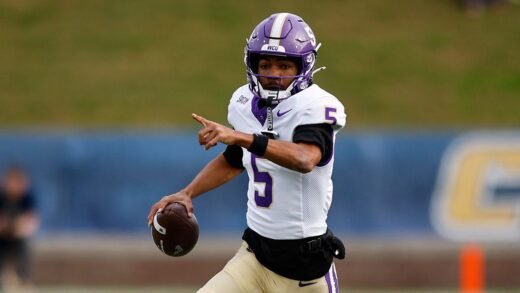
UNC adds third quarterback to roster after lackluster 2025 campaign
new admin - Feb 16, 2026[ad_1] NEWYou can now listen to Fox News articles! Bill Belichick continued to make changes to his 2026 UNC roster…