The Collective Impact of Higher Ed Is Its Best Story

At an average of $8 million per 30-second spot, a Super Bowl ad isn’t where I’d expect to see colleges advertising themselves. In fact, I’m unlikely to see an ad from an institution on any platform; according to research from American University’s Postsecondary Education and Economics Research Center, total advertising spending by higher education institutions dropped by more than half between 2010 and 2022, from $1.26 billion to $600 million, with for-profit colleges accounting for the bulk of the current spending.
And yet, the sector struggles to communicate its value to the American public. A recent exhibit on HBCUs at the National Museum of African American History and Culture suggests a different way higher ed can show its impact that doesn’t require millions of dollars in TV ads—but it does mean colleges must leave their egos at the door.
In “At the Vanguard,” curators highlighted stories of ingenuity, creativity and academic achievement from five historically Black colleges and universities. Amid black-and-white photographs of students from the turn of the 20th century and plaques with words from Black academic leaders such as W. E. B. Du Bois, Booker T. Washington and Ruth Simmons, I saw vibrant paintings from artists studying and working at Clark Atlanta and Texas State University inspired by the African diaspora, video games and social resistance movements. I learned about Florida A&M University’s vegetable gardening extension program, which helped farmers in the 1960s learn how to use new mechanical equipment. And I touched actual student-made bricks used in the construction of Tuskegee University buildings.
The exhibit was organized as part of the HBCU History and Culture Access Consortium, a five-year project that’s part training for students seeking careers in arts and culture, part archival project to preserve the cultural history of HBCUs, and part promotion of the role that the art, history and culture of HBCUs played in shaping America.
The curated stories from students, woven together with archival material from five institutions had a clear and powerful message: HBCUs have been transformative for their communities.
HBCUs have a shared, unique mission and have collectively impacted the country in profound ways for over a century. Thanks to them, the U.S. won the space race with the help of female mathematicians trained at HBCUs; we have the poetry of Langston Hughes and the prose of Toni Morrison, both graduates of HBCUs; and all Americans benefit from the hard-won civil rights that HBCU student activists fought for in the 1960s.
As I regarded fliers of Margaret Walker’s 1973 Phillis Wheatley Poetry Festival, I wondered if this exhibit might hold a lesson in framing for the wider higher ed sector. What if a college’s marketing strategy didn’t focus on promoting the institution’s own brand or its graduation rate on a billboard or radio ad but instead focused on curating a holistic picture of how it and other institutions have had a role in advancing a community? Imagine an R-1 institution, community colleges and private nonprofit institutions working together to feature firsthand student, employer and patient accounts to show how they have helped build the health workforce for an entire state? Another curation project could feature the engineers, tradespeople and social planners with degrees and certificates from local institutions who keep a city running—from trash collection to traffic lights.
What the exhibit highlighted is something we all know: The power of higher education extends beyond just the graduates with degrees. Devoid of the competition that is so ingrained in higher ed, “At the Vanguard” offered the simple but refreshing experience of celebrating institutions’ achievements as parts contributing to a whole. Finding the shared narrative among a group of institutions—regardless of their acceptance rate, Carnegie classification or tuition price—would be a radical new way to offer the public a richer and more grounded idea of where higher ed fits into society.
Curating the lived experiences and historical benefits of a group of colleges for a specific shared mission would show, rather than tell, audiences about the value of higher ed. A project like this wouldn’t solve the persistent problems of low graduation rates, affordability or politicization on campus, but it’s a fresh way of seeing how higher ed institutions of all kinds impact the communities they serve.

You may be interested
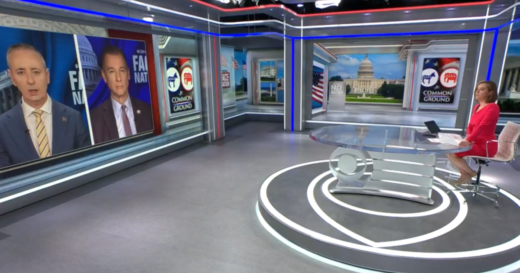
Face the Nation: Fitzpatrick, Suozzi and Gates
new admin - May 17, 2026Missed the second half of the show? Reps. Brian Fitzpatrick and Tom Suozzi of the Problem Solvers Caucus join, plus…
NWA wrestler Cristiano Argento’s journey from Italy to pro wrestling in US
new admin - May 17, 2026[ad_1] NEWYou can now listen to Fox News articles! Cristiano Argento has been tearing up opponents in the ring for…
‘Masterpiece’ sci-fi hailed as ‘greatest film ever made’ leaving Amazon Prime in days | Films | Entertainment
new admin - May 17, 2026A "masterpiece" science fiction film hailed as the "greatest movie ever" is streaming now in the UK. The Matrix (1999)…