UNC Admin Can Now, Officially, Secretly Record Faculty

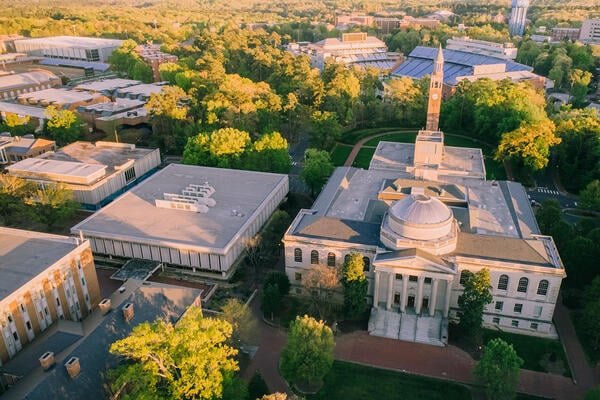
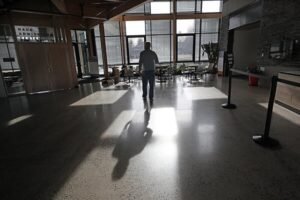
In 2024, the university opted not to renew the contract of economics instructor Larry Chavis, whose classes administrators had secretly recorded prior to their decision.
Ryan Herron/iStock/Getty Images
The University of North Carolina at Chapel Hill recently rolled out a new policy that permits university officials to record classes without notifying the instructor. It’s a practice administrators have used in the past to investigate professors but have now formalized in writing.
According to the policy, administrators may, with the provost and general counsel’s written permission, record classes or access existing recordings without telling faculty in order to “gather evidence in connection with an investigation into alleged violations of university policy” and “for any other lawful purpose, when authorized in writing by the provost and the office of university counsel, who will consult with the chair of the faculty.”
Mehdi Shadmehr, an associate professor of public policy at UNC, told Inside Higher Ed the policy is “completely outside any kind of norm.”
“This is something that governments in Iran and Syria and East Germany and maybe military regimes back in the day in Argentina and Brazil would do, but in the United States? That’s just crazy,” he said.
Students are prohibited from recording in class without explicit permission from the instructor—a practice that has landed professors at other universities in political hot water in recent months. UNC students may seek an exemption to record through the accessibility resources office if needed, the policy states. Faculty members may record their own classes for “instructional purposes” but must notify students prior to recording. To record classes as part of tenure and promotion evaluation, the university must notify instructors of the forthcoming recording at least seven calendar days in advance and work with the instructor to find a class date that is “representative of the overall course.”
A spokesperson for UNC did not answer Inside Higher Ed’s questions about the policy but said in a statement that its purpose was to “provide procedural clarity” and “protect both instructors and students.”
The spokesperson also said the policy had been developed with “feedback from across campus, including Faculty Governance, the Offices of Faculty Affairs, Human Resources, University Council and the University Compliance Office,” a point faculty members dispute.
The formal recording rules have been in the works for a while, said Shadmehr. In 2024, the university opted not to renew the contract of economics instructor Larry Chavis, whose classes administrators had secretly recorded prior to their decision. In a letter to Chavis, senior associate dean Christian Lundblad said the Office of the Undergraduate Business Program received “reports concerning class content and conduct within your class,” and that in response, the university recorded four of his classes using the existing Panopto camera in the classroom.
“Notice is not required to record classes, and we do record classes without notice in response to concerns raised by students,” Lundblad wrote to Chavis, a member of the Lumbee Tribe of North Carolina and outspoken advocate for Indigenous and LGBTQ+ rights. “We wanted to let you know that we will continue recording your class as part of a formal review process.”
Faculty quickly raised concerns about the recording rules, and then-provost Chris Clemens told faculty members that the university would work on creating a formal policy, Shadmehr said.
Months passed before professors received any updates about the policy. Earlier this week, interim provost Jim Dean told faculty leaders that he’d shared the draft policy with “a number of people” for final comments, and he plans for the policy to take effect Monday, Shadmehr said.
Most faculty members learned about the new policy via their American Association of University Professors chapter and the local news, said Mark Peifer, a biology professor at UNC. They have not been formally notified by the university.
University leaders—from the systemwide Board of Governors to the provost—have made several decisions in recent months that curb professors’ freedoms in the classroom. UNC system president Peter Hans announced in December that syllabi will be considered public records and that faculty must share them online beginning next fall. A week later, the university decided—with no formal announcement to faculty—to shutter its six area studies centers. At the end of this month, the system Board of Governors will vote on a formal—but contested—definition of academic freedom that states it is “not absolute” and prohibits teaching material “clearly unrelated to the course description.”
The word-of-mouth news is “exactly what happened with the area study center closures,” Peifer said. “It came out in the student newspaper—that’s how faculty found out about it. The area studies directors were told the day before because the university knew that it was coming out in the newspaper.”
Students, staff, faculty (including visiting faculty), teaching assistants, postdoctoral scholars, contractors and vendors are subject to the new policy. It does not spell out limitations or permissions for campus visitors, who have secretly recorded conversations with faculty members in the past. Just earlier this week, North Carolina State University fired the assistant director of its LGBTQ Pride Center after the anti-DEI group Accuracy in Media secretly recorded him appearing to violate system policies regarding institutional neutrality on political issues. Employees at three other North Carolina institutions—UNC Charlotte, UNC Asheville and Western Carolina University—have also lost or left their jobs after Accuracy in Media stings.
You may be interested

“The noose is getting tighter” on Iran amid blockade, Middle East expert says
new admin - Apr 15, 2026The White House said more than 100 empty oil tankers are heading to ports in the U.S. to load up…
Raiders GM says teams are calling about trading up for No. 1 pick
new admin - Apr 15, 2026[ad_1] NEWYou can now listen to Fox News articles! The Las Vegas Raiders are expected to make Fernando Mendoza, the…
Kacey Musgraves Joins Weekend Two Lineup
new admin - Apr 15, 2026[ad_1] The country star was added as a surprise performer on Saturday Kacey Musgraves has officially been added to the…