



What to Know About the Government Shutdown and Budget Deal

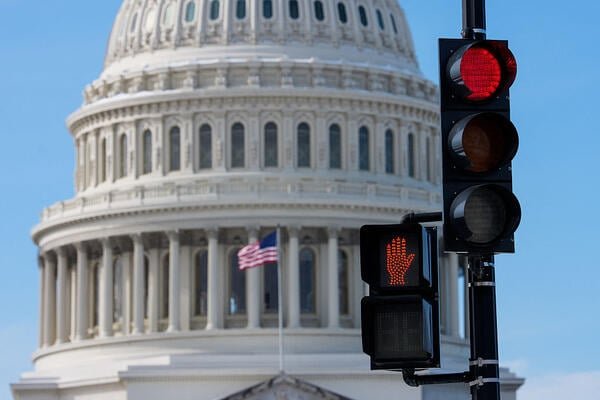
The federal government is shutting down for the second time in four months. While the first closure persisted for a record 43 days, this one is expected to end within this week, as soon as Tuesday.
However, until the House of Representatives agrees to pass a five-bill package that the Senate approved Friday, nonessential operations at the Education, Labor, and Health and Human Services departments will be curtailed along with those at Defense, Transportation, Housing and Urban Development, State, and Treasury. Congress has already approved legislation to fund the other agencies.
During the previous shutdown, about 95 percent of employees at the Education Department were furloughed, and the agency suspended grant-making activities as well as civil rights investigations. Shutdowns historically don’t have an immediate impact on colleges and universities, but the longer one lasts, the more disruptive it becomes. The last lengthy closure, which started Oct. 1, 2025, fueled uncertainty on college campuses and disrupted research funding, tuition assistance and basic needs support for students.
The House returns Monday, and Speaker Mike Johnson said Sunday he was “convinced” lawmakers will approve the five spending bills by Tuesday. Funding for the agencies ran out Friday night.
If the House follows through and passes the legislation, the Education Department would receive nearly $79 billion despite the administration’s proposal to slash $12 billion from the agency. Meanwhile, the National Institutes of Health would see an additional $40 million; the administration wanted to cut $18 billion.
“I said we’d put President Trump’s budget in the shredder, and that is exactly what Congress has done,” said Senator Patty Murray, a Washington Democrat and ranking member on the appropriations committee. “President Trump fought to gut funding for cancer research, kick millions out of their homes, and slash investments in students across America—but Democrats fought back, so these bills do nothing of the sort. Because Democrats were at the table, we protected public education, affordable housing, and so many programs that working people count on every day.”
Bills Give Higher Ed a Boost
The Senate passed a stop-gap bill to fund the Department of Homeland Security for two weeks while it negotiates reforms with the White House. If the other five bills pass the House, however, higher ed will have a number of wins.
In addition to increased funding for the National Institutes of Health, Congress is planning to fully fund a number of ED grant programs that President Trump wanted to cut. For instance, in the president’s proposed budget, TRIO, child care on campus grants and the Supplemental Educational Opportunity Grant program were all on the chopping block. But Congress maintained funding for all three as well as the minority-serving institution grant programs, which the Education Department has declared unconstitutional and subsequently defunded.
Murray, who has pushed back repeatedly on the Trump administration’s efforts to cut funding for certain grant programs, said in a statement that the legislation won’t allow the Trump administration to “unilaterally defund programs to fund their own priorities—or to pick and choose what projects get funding.”
However, the legislation doesn’t specifically prevent the Education Department from outsourcing grant programs to other federal agencies, a guardrail some Democrats had wanted to see.
The maximum Pell award would remain at $7,395 for the 2026–27 academic year, under the legislation. The Trump administration had proposed cutting $1,685 to address what was an estimated $2.7 billion shortfall.
Overall, the Education Department and its programs would get essentially level funding, which is considered a win in the current political environment, Emmanual Guillory, senior director of government relations at the American Council on Education, previously told Inside Higher Ed.
Congress also rejected the Trump administration’s deep cuts to the State Department’s Educational and Cultural Exchanges, which includes the Fulbright program. The administration’s plan would “essentially eliminate State Department international exchange programs,” the Alliance for International Education warned in May. But now, the exchange programs will receive $667 million, which is less than the $741 million allocated in fiscal year 2024.
The alliance wrote in an online post that the funding “nonetheless represents a strong commitment to sustaining exchange programs.”
Earmarks Return
Congress failed to pass a full budget for fiscal year 2025, which meant that lawmakers didn’t dole out billions in congressional-directed spending—funding that’s commonly referred to as earmarks.
But now, that funding will resume if the bills are signed into law, and colleges and universities would benefit from millions in funding for projects and other one-time purchases. Historically, the earmarks have helped colleges purchase equipment, construct or renovate facilities or launch new academic programs.
This round of funding includes $9.5 million for Columbus State Community College to support the Ohio Center for Advanced Technology and nearly $6 million is going to Central Carolina Community College to build an EMS/fire training facility, according to an analysis from the American Association of Community Colleges (AACC). Over all, AACC found that 110 community colleges would receive more than $170 million. That’s likely a fraction of the total funding that colleges would get. In fiscal year 2024, Inside Higher Ed found that Congress has earmarked more than $1.3 billion for higher ed.
Fatal Shooting Derails Talks
Earlier this month, Congress appeared likely to avert a shutdown of any kind as lawmakers reached bipartisan deals to fund the government, which passed the House on Jan. 22. But the killing of Alex Pretti in Minneapolis at the hands of federal immigration officers upended the funding talks because the legislation included funding for the Department of Homeland Security.
Senate Democrats wanted to see restrictions on immigration officers and accountability for those who violate the law in any legislation that funds DHS for a full year. Ultimately, the Senate agreed to cut DHS from the overall package and only fund the agency for two weeks while Democrats negotiate with the White House over reforms.
“When we pass this package and when it is signed into law, on top of the previous packages, we will have funded 96 percent of all of government,” said Senator Susan Collins, the Maine Republican who chairs the Senate appropriations committee. “This marks an important milestone and shows that Congress can work together in a bipartisan manner to carry out our Article I responsibilities and deliver results for the people we are honored to represent.”
You may be interested

Judge blocks DHS from ending deportation protections for 350,000 Haitians one day before they were set to lapse
new admin - Feb 03, 2026A federal judge on Monday blocked the Trump administration from revoking legal protections for Haitians enrolled in the Temporary Protected…

BTS Announce New Live Comeback Performance and Documentary
new admin - Feb 03, 2026[ad_1] The upcoming performance and doc will stream exclusively on Netflix BTS is gearing up for their long-awaited return, revealing…

I asked experts which items they’d never buy in a supermarket — they named 18
new admin - Feb 03, 2026I asked experts which items they'd never buy in a supermarket — they named 18 (Image: Getty Images)I asked experts…