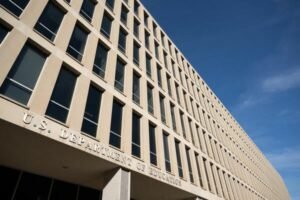


SHEEO Releases Annual State Priorities Survey

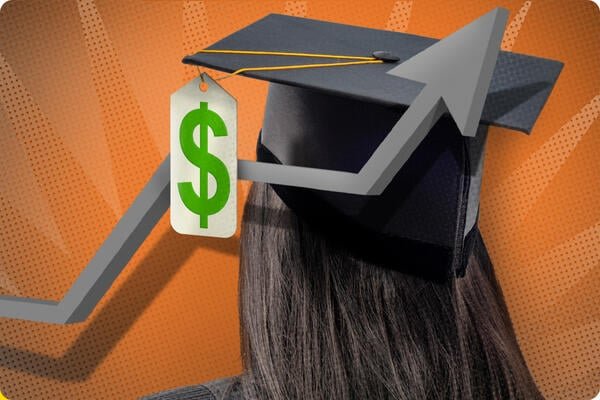
Affordability has always been a buzzword for lawmakers on Capitol Hill, but polling shows that it’s becoming increasingly popular among state higher education agencies as well.
According to the latest annual State Priorities survey from the State Higher Education Executive Officers, college affordability jumped from the sixth-most-important policy issue among higher ed executives in 2025 to the second most this year.
SHEEO researchers emphasized that affordability has “consistently [been] among the top priorities” for the roughly 45 state executives surveyed each year; the average score from respondents this year only increased 0.1 points on a 1-to-5 scale. Nonetheless, they agreed that the increase represents a significant and timely change—one that was likely influenced by the political climate in Washington.
“Affordability is the key overarching issue for policymakers heading into the 2026 midterm election, and state higher education leaders are certainly not immune from pressure to lower costs,” said Tom Harnisch, SHEEO’s vice president for government relations. “So there’s going to be, I foresee, continued legislative efforts to hold the line on tuition, make increased investments in financial aid and address other areas that are related to college costs.”
The increased focus on affordability has also been reflected in state legislation; 33 states indicated that they had instituted a tuition freeze and/or limit in at least one public higher education sector in the past five years. Another 20 have considered legislation to create or expand statewide promise programs, which provide free or significantly reduced college tuition for eligible students.
But state systems still have work to do to address public concerns. Roughly 60 percent of all adults say cost is the biggest barrier preventing students from enrolling in or completing a postsecondary degree, according to a report from the left-leaning think tank New America.
Other key policy issues include economic and workforce development (which held its place at No. 1), higher education’s value proposition (No. 3), and college completion/student success (No. 5), the SHEEO survey shows. A topic that had not previously been included in SHEEO surveys also gained prominence this year: state impacts from federal policy changes, which placed sixth on the list of 25 issues.
Collectively, Harnisch said, this year’s results, and the relatively consistent results of recent years, reflect a slow but steady transition concerning who is responsible for bearing the cost of college.
“It just shows the overarching cost shift from states to students, and associated with that cost shift is the need for students to get a job, to help pay for their education and associated student debt,” he explained. “These are all downstream effects of that.”
SHEEO researchers also noted that while state budgets for higher ed range widely, funding has declined over all since the COVID-19 pandemic and its “record state budget surpluses.” The major funding cuts to Medicaid and the Supplemental Nutrition Assistance Program through the One Big Beautiful Bill Act will likely only make higher education budgets tighter, they added.
“Many states with biannual budgets set them in 2025, so they will not be in budget sessions again until 2027. But those states that do have budgets in 2026 are more likely to face changes, and higher education is often most vulnerable to those changes,” Harnisch said. “So as more states have budget shortfalls, revenue growth is softening and there’s increased competition for limited state funding, states are going to be increasingly challenged on the affordability front.”
Still, despite looming budget cuts, “unstable federal funding streams and intensifying state and federal political pressures,” SHEEO says there are reasons for optimism.
Concerns about completion of the Free Application for Federal Student Aid dropped nine spots to the 18th-most-important issue for higher leaders this year. And despite the looming predictions of a major demographic cliff, which is slated to take effect in 2026, enrollment declines dropped from the seventh-most-important issue in 2025 to 16th most important this year.
If anything, SHEEO hopes that enrollment will continue to climb as students pursuing eligible short-term education and training programs gain access to Pell Grants for the first time starting on July 1, under a new program called Workforce Pell.
“[The year] 2026 holds a lot of unknowns as we look to see what state legislators will prioritize and how changes at the federal level will impact states,” Harnisch said in a news release about the report. But as “economic and workforce development continues to be top of mind, and with the implementation of Workforce Pell rolling out later this year, we’re optimistic that states will continue to make advances in addressing workforce needs.”
You may be interested

Wyndham Clark holds on to win 2026 U.S. Open after squandering lead in final round
new admin - Jun 21, 2026On the edge of the greatest collapse in U.S. Open history, Wyndham Clark held his nerve against a charge by…
Transcript: GOP Sen. Lindsey Graham on “Face the Nation with Margaret Brennan,” June 21, 2026
new admin - Jun 21, 2026The following is the transcript of the interview with Republican Sen. Lindsey Graham of South Carolina that aired on "Face…
Obama urges resiliency and unity during speech at Obama Presidential Center opening
new admin - Jun 21, 2026Former President Barack Obama and former first lady Michelle Obama were joined by their daughters Thursday at the opening ceremony…