


Amblyopia (Lazy Eye) Treatment: Eye Patching, Drops, Digital Therapies & More

By: Eniolami O. Dosunmu, MD, MPH, FAAO, FAAP
Amblyopia, also known as “lazy eye,” is a common eye condition in kids. It develops when a child has an eye that does not see well. This is caused by a poor connection between the eye to the brain, which can happen for different reasons. Amblyopia is more common in one eye, but can also happen in both eyes.
Why is it important to treat amblyopia early?
To restore normal vision in the affected eye, it is important to detect amblyopia as early as possible and treat it properly. If the problem continues too long, past a certain age, vision is often lost permanently.
What causes amblyopia?
Amblyopia can develop in different ways, but all involve the brain not getting clear, balanced input from both eyes.
There are different types of amblyopia, including:
-
Strabismic amblyopia: When one eye is not lined up with the other. The eye could be turned inwards, outwards, upwards or downwards. When the two eyes do not see the same thing, the moving or wandering eye will lose vision. -
Deprivation amblyopia: When there is something within the visual pathway that limits vision. For example, a cataract (clouding of the lens) or a ptosis (droopy) eyelid will block the vision,and lead to amblyopia. -
Refractive amblyopia: When an eye needs glasses to see well. The brain will not be able to form a proper image if the information it receives from the eye is out of focus, and the eye develops amblyopia.
How is amblyopia treated in children?
There are a number of amblyopia treatment options:
Glasses
Wearing the correct glasses, so that the eye has a clear image to send to the brain, is a very powerful treatment for refractive amblyopia. This is very effective in bilateral (both eyes) refractive amblyopia, and for unilateral refractive amblyopia.
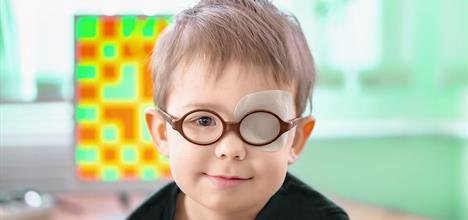
Eye patching therapy
Once an
ophthalmologist diagnoses the problem in the weaker eye, your child may need to wear a patch over the “good” eye for periods of time. This forces them to use and strengthen the eye that has become “lazy.” Patching therapy will be continued for as long as necessary to bring the weaker eye up to its full potential and keep it there. This could take weeks, months or even a few years.
Eye drops or ointment
As an alternative to an eye patch, the ophthalmologist might prescribe eye drops or ointment to blur the vision in the good eye and force the weaker eye to work and be strengthened. This can stimulate your child to use the amblyopic eye. Like patching, this could take an extended period before treatment is completed.
Binocular vision therapy
There are newer treatments for amblyopia. These treatments use digital technology to focus on both eyes.
There are two FDA-cleared treatments in the United States. Luminopia uses a virtual reality platform where the image seen by the stronger is altered; this allows for the weaker eye to improve vision. Curesight uses an eye tracking platform and special glasses that affect the central vision of the stronger eye, allowing for the weaker eye to improve.
Lumonipia is FDA cleared for children ages 4-12, and Curesight is FDA cleared for ages 4-9. Both have been proven effective in amblyopia treatment. However, cost may be a limiting factor for these treatments, since they may not be covered by all insurance plans.
Is surgery a treatment for amblyopia?
Surgery can be used along with the therapies listed above to treat amblyopia. However, it cannot be the only treatment used for amblyopia. For example, surgery to remove a cataract may be needed for deprivation amblyopia, along with glasses wear and patching.
An examination with a pediatric ophthalmologist will be helpful as you make decisions for amblyopia treatment for your child.
More information
About Dr. Dosunmu
|
 Eniolami O. Dosunmu, MD, MPH, FAAO, FAAP, is a member of the American Academy of Pediatrics (AAP) Section on Ophthalmology and the Ohio Chapter of the AAP. She serves on Pediatric Rural Health Workgroup and has served on the Executive Committee Section on Ophthalmology for the AAP. She is also an Associate Professor of Ophthalmology at the Abrahamson Pediatric Eye Institute, Cincinnati Children’s Hospital Medical Center, and the University of Cincinnati.
The information contained on this Web site should not be used as a substitute for the medical care and advice of your pediatrician. There may be variations in treatment that your pediatrician may recommend based on individual facts and circumstances.
You may be interested

U.S. strikes 3 Iranian oil tankers after Iran targets Navy warships, CENTCOM says
new admin - Sep 05, 2026U.S. forces struck three Iranian oil tankers Saturday after Iran launched ballistic missiles toward two U.S. Navy shifts, the U.S.…
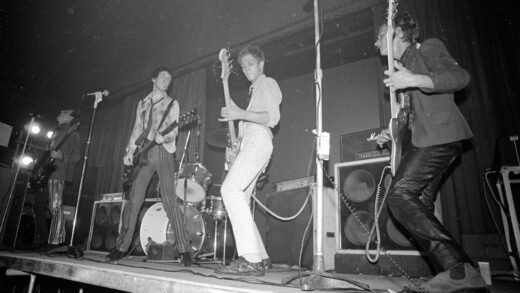
The Clash Battled With Hecklers At Their Fifth Gig
new admin - Sep 05, 2026[ad_1] The lucky few who went to London’s Roundhouse on Sept. 5, 1976, had no clue they were about to…
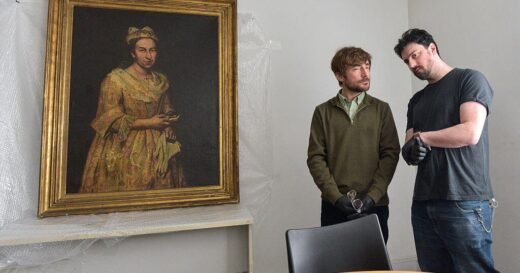
“Portrait of a Lady,” Italian painting looted by Nazis, ordered returned to Jewish collector’s heir
new admin - Sep 05, 2026A 17th-century Italian painting looted by Nazis from a prominent Jewish Dutch art collector must be returned to the rightful…