




Biologists race to rescue bat populations from deadly white-nose syndrome

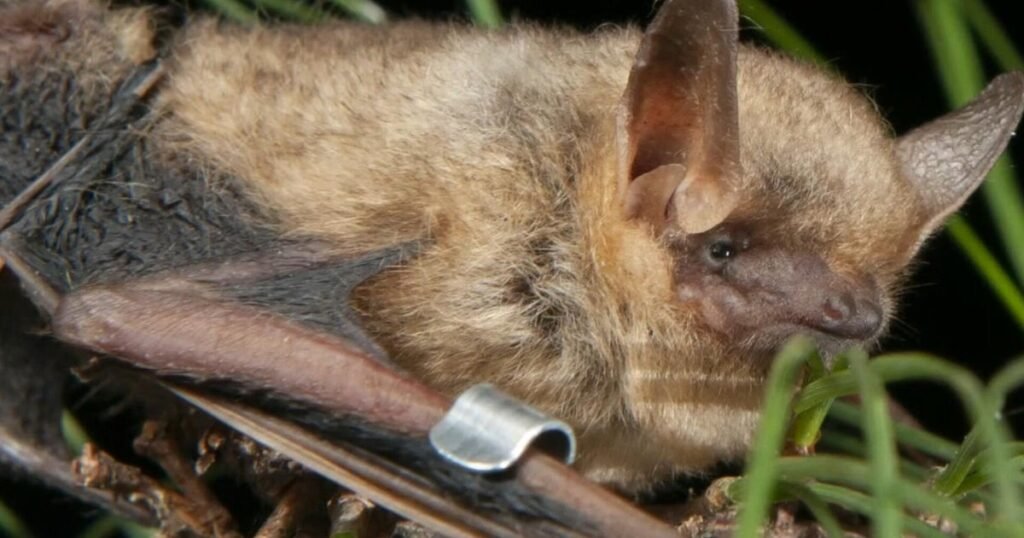
Highlands, North Carolina — In the North Carolina town of Highlands, about 20 feet below ground in a goldmine from the 1800s, there is a race against time to save a bat population whose numbers are being decimated by a disease known as white-nose syndrome.
North Carolina’s tricolored bats are unstable, among several species of bats quickly dying off in the dark. The bats eat the same bugs that kill crops, meaning they play a critical role in the ecosystem.
“As bat populations are declining, we see that there’s a greater need for use of pesticides,” said Rada Petrick, a bat expert and research assistant professor of biology at the University of North Carolina who also serves as director of the UNC Institute for the Environment Highlands Field Site.
These flying creatures may look scary, but the real monster in this cold and damp deathtrap is a highly infectious, bat flesh-decomposing fungus that will gnaw their wings right down to the bone.
Lindsey Zarecky, vice president of conservation of research at the Greensboro Science Center, and Olivia Munzer, conservation coordinator for the North Carolina Wildlife Resources Commission, are among the biologists working to save the bats.
“Today we’re just getting a count to see what is here, and how many of them are there,” Zarecky said inside the old goldmine.
And there’s only a handful of bats left in the cave. But it’s not the fungus that is killing them. During winter hibernation, their white noses start to itch, waking them up and sending them looking for food that isn’t there.
They end up wasting precious calories looking for bugs that aren’t in season, and they starve.
So, biologists have turned to a new method that seeks to increase the fat stores of bats before they enter hibernation. It involves placing a bright bug-attracting light about a tennis court away from bat caves.
“How about if we fatten the bats enough, right before they go into hibernation, that it increases the likelihood of them surviving the winter,” Petrick explains.
Adds Munzer, “There’s a bit of patience, and definitely a glimmer of hope to watch these animals learn how to survive through this fungus in the winters.”
According to the National Park Service, white-nose syndrome was first detected in North America in the early 2000s. Through 2018, it has caused the populations of three species — little brown bats, northern long-eared bats and tricolored bats — to decline by more than 90% in North America, according to a 2021 study.
You may be interested

‘One of the best action films ever made’ leaving Netflix | Films | Entertainment
new admin - Feb 04, 2026It's packed cast includes Jamie Foxx and Jason Bateman (Image: Universal)A 'brutal and underappreciated' contemporary war film is departing Netflix…

NASA plans on-pad leak repair for grounded Artemis II moon rocket before possible March launch
new admin - Feb 04, 2026NASA plans an on-pad repair of the fuel leak that derailed an overnight dress rehearsal countdown for the agency's huge…

Lions fan names DK Metcalf, Steelers, Ford Field in $100M defamation suit
new admin - Feb 04, 2026[ad_1] NEWYou can now listen to Fox News articles! Ryan Kennedy, a Michigan resident and self-described Detroit Lions fan, is…