




Elon Musk’s SpaceX says it has cut Starlink services at Myanmar scam compounds

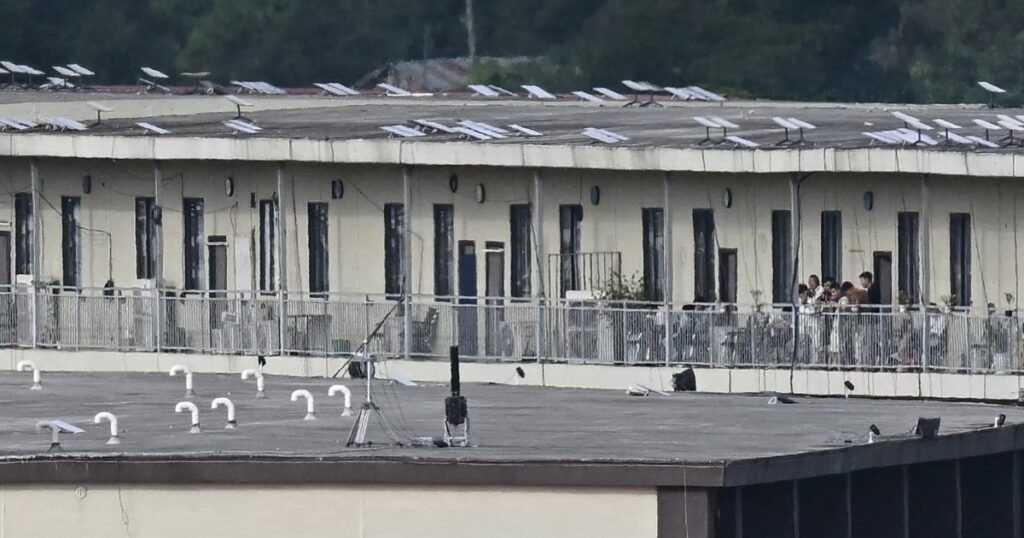
Elon Musk’s SpaceX has disabled more than 2,500 Starlink devices in and around scam centers in Myanmar, following warnings from activists that mainly Chinese syndicates were using the technology to defraud people worldwide.
The company “proactively identified and disabled over 2,500 Starlink Kits in the vicinity of suspected ‘scam centers,’” Lauren Dreyer, SpaceX’s vice president of business operations, wrote on X late Tuesday.
“We are committed to ensuring the service remains a force for good and sustains trust worldwide: both connecting the unconnected and detecting and preventing misuse by bad actors,” she added.
The company’s terminals enable internet in remote areas by using satellite dishes that connect to SpaceX’s satellites. Photos had previously shown the dishes atop documented scam compounds along the Thai-Myanmar border.
The SpaceX announcement came after Myanmar’s military shut down a major online scam operation known as KK Park.
According to state-run news outlet Myanma Alinn, the army seized 30 sets of Starlink terminals and detained nearly 2,200 people in the Monday raid on the cybercrime center outside Myawaddy, a major trading town in Myanmar’s Kayin state.
Myanmar, where the civilian government was overthrown in a military coup in 2021, is notorious for cybercrime. The Southeast Asian nation is embroiled in a civil war with various ethnic groups fighting the military, creating an almost lawless situation in many parts of the country and allowing scam operations to thrive.
Workers in the scam compounds are often trafficked from third countries, usually under the pretense of a lucrative job offer, and then forced to scam people online with investment pitches or romantic ploys.
Following international pressure, particularly from neighboring Thailand and China, whose nationals have also been trafficked to work in these compounds, the junta — working alongside the same armed ethnic groups it opposes — launched a massive operation in February and released hundreds of workers.
The practice is also well documented in other countries around the region such as Cambodia, where the U.S. last week seized more than $14 billion in bitcoin and formally charged the chairman of a Cambodian conglomerate over his alleged involvement in a massive cryptocurrency scam.
The U.S., along with the U.K., also sanctioned the company, which was declared a transnational criminal organization by the Treasury Department.
Last year, Americans lost at least $10 billion to Southeast Asia-based scams, according to the Treasury Department, a 66% increase from the year before.

The Associated Press contributed.
You may be interested

A teen found “a sense of control” as she fought cancer. Then, it came back: “I knew it was cancer again.”
new admin - Aug 22, 2026Alayna Riozzi-Bodine had expected the summer before her senior year of high school to be tiring. She was a lifeguard…

Two great new repairable gadgets
new admin - Aug 22, 2026Hi, friends! Welcome to Installer No. 141, your guide to the best and Verge-iest stuff in the world. (If you’re…

I swear by 24p method to remove stains from white clothes — works on food and makeup
new admin - Aug 22, 2026Whether it's food, makeup or dirt stains, I swear by this hack to keep my clothes looking pearly white without…