



Doctor warns anyone whose hands and feet change colour in the cold

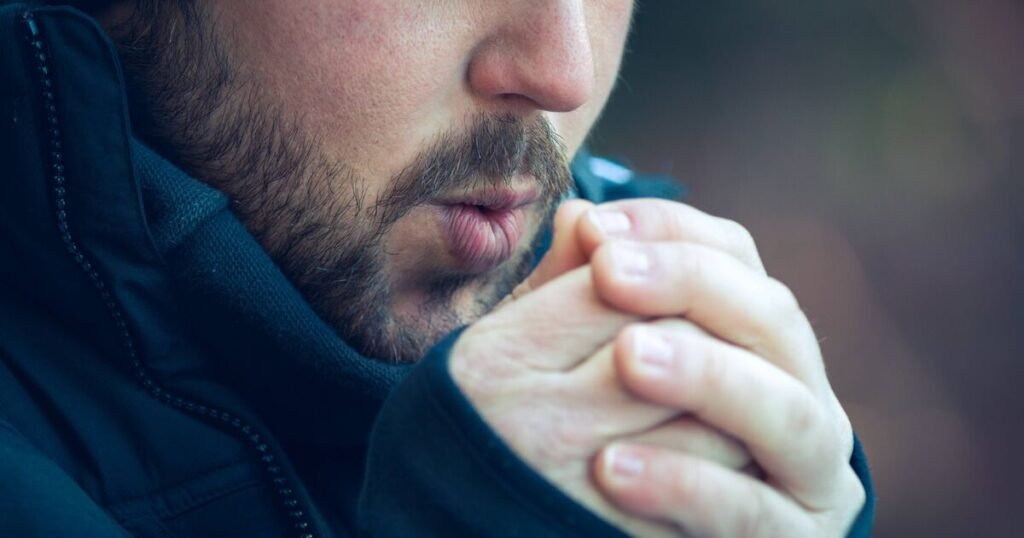
A doctor is warning anyone whose hands and feet change colour during chilly weather that they might be suffering from a serious health issue. There are a number of other symptoms the doctor says to keep an eye out for to.
The condition, known as Raynaud’s, can trigger certain body parts including fingers and toes to become numb and cold when exposed to low temperatures or stress. Dr O’Donovan, who holds a medical qualification (MBBS), a Masters Degree (MRes) in Ageing and Health, and a PhD (DPhil) in Digital Education, provides guidance and information to his 496k YouTube followers.
In one clip, he outlined the indicators of Raynaud’s and advised when medical assistance should be sought. He explained: “In Raynaud’s disease the smaller arteries that supply blood to the skin narrow in response to triggers like cold weather this limits blood flow to the affected areas which is called vasospasm and it then results in symptoms of Raynaud’s.
“Over time the small arteries can thicken slightly and it can further limit blood flow even more.”
When discussing warning signs, he continued: “In terms of signs and symptoms, the first thing that you’re likely to notice are the areas of your skin can turn white then blue but depending on your skin colour.
“These colour changes may be harder or easier to see, you may also notice that you’ve got particularly cold fingers or toes or you might notice other changes in the sensation of your hands or feet so things like a numb, prickly feeling or stinging pain.
“Now when the skin warms and blood flow improves the affected areas may change colour again they may throb tingle or swell. Whilst it most commonly affects fingers and toes it can actually affect other areas of the body so things like the nose the lips and ears. Now even after you’ve warmed up it can take up to 15 minutes for blood flow to return to the area.”
The doctor explained that specialists “don’t fully understand” what triggers Raynaud’s episodes, though “blood vessels in the hands and feet appear to react too strongly to cold temperatures or stress.” He noted that chilly conditions are typically the “most likely” trigger for an attack, using examples like putting hands in cold water, taking something from a freezer or being in cold air. He claimed that, for some people, emotional stress can also trigger an episode.
Dr O’Donovan advised: “You should see your doctor if you have symptoms of Raynaud’s that are very bad or getting worse, the Raynaud’s is affecting your daily life, your symptoms are only on one side of the body, you also have joint pains, skin rashes or muscle weaknesses.”
The GP also recommends consulting a doctor if “you’re over 30 years old and get symptoms of Raynaud’s for the first time, or your child is under 12 years old and has symptoms of Raynaud’s.”
You may be interested
Youth program teaches tennis, academics for the “skills to be champions in life”
new admin - Aug 31, 2026The U.S. Open officially began on Sunday, but the tournament is just one reason a record number of Americans are…

ICE deports Afghans and others to Africa, expanding “third country” deportations
new admin - Aug 31, 2026Over a 10-day period, the Trump administration sent more than 100 deportees from Afghanistan, Cuba, Nicaragua and other nations to…

A look at NASA’s Roman Space Telescope, heading into deep space
new admin - Aug 31, 2026NASA's next-generation telescope blasted off atop a SpaceX rocket at the Kennedy Space Center on Sunday. The $4.3 billion Roman…