



Under Anti-DEI Pressure, Ohio State Limits Conference Funds


The Trump administration’s investigation into allegations of racial discrimination at Ohio State University has prompted the university to limit its support for faculty and student participation in academic conferences affiliated with affinity groups.
Critics say it’s another example of OSU’s overcompliance with Republican-led crackdowns on diversity, equity and inclusion initiatives.
In response to President Trump’s DEI ban and a sweeping anti-DEI law the Republican-controlled Ohio Legislature passed earlier this year, OSU has already closed its DEI offices, restricted decorations permitted in public dorms and banned most public land acknowledgments. And now, scholarly conferences and associations that represent underrepresented groups have become the university’s latest political pressure-relief valve.
Earlier this month, the university told numerous faculty and students who were planning to attend an upcoming conference hosted by the Society for Advancement of Chicanos and Native Americans in Science, which happens to be in Columbus this year, that they could not use university funds to attend, The Columbus Dispatch first reported Tuesday.
“If you are attending or presenting your research at the upcoming SACNAS conference in Columbus at the end of October, please be aware that the university has informed me that we cannot reimburse conference registration or other expenses associated with your participation,” the chair of OSU’s astronomy department wrote in an Oct. 1 email obtained by Inside Higher Ed. “However, you are welcome to attend and/or present your work at the meeting.”
The university also refunded the registrations—without explanation—of a group of graduate students who were planning to attend the 2025 National Society of Black Physicists and National Society of Hispanic Physicists Joint Conference next month in San Jose, according to The Columbus Dispatch.
The decision prompted backlash from scholars, including many whose work is funded by grants that allocate money to attend professional conferences, which typically charge hundreds of dollars in registration fees.
“People were very upset because we’d already registered for the meeting and expected to be reimbursed for expenses,” said Laura Lopez, an astronomy professor at OSU who is slated to present at the SACNAS conference in two weeks. “These conferences are open forums for us to present our work, network and collaborate. Telling us that they’re going to regulate whether or not we can participate feels very stifling, prohibitive and like OSU isn’t protecting [our academic freedom].”
Researchers voiced their concerns at two town halls. Soon after, university administration clarified its policy on who could use university money, including research grants, to attend the SACNAS conference.
“If an Ohio State faculty member or student is scheduled to present research or participate in sessions that advance their research at the SACNAS conference, then the faculty member or student can attend and use university funds to do so,” Ravi V. Bellamkonda, OSU’s executive vice president and provost, wrote in an Oct. 2 email reviewed by Inside Higher Ed. “If an Ohio State faculty member or student is NOT scheduled to present research or participate in sessions that advance their research (e.g., the purpose of attending is solely for recruitment) at the SACNAS conference but wishes to participate in the conference, they may still attend but must use personal resources to do so.”
(OSU did not respond to questions from Inside Higher Ed seeking to clarify which other conferences, if any, this policy applies to.)
OSU isn’t the only university responding to anti-DEI pressure by placing new restrictions on conference attendance.
Last month, Florida State University updated its policy regarding faculty travel grants to comply with a state law that prohibits using university funds for organizations “that discriminate on the basis of race, national origin, gender, or religion.” To get funding, FSU faculty have to attest that the conference they want to attend doesn’t “advantage” a particular racial or ethnic group and that their presentation doesn’t suggest that one group has “inherently or structurally oppressed other groups.”
But it was pressure from the federal government that pushed OSU to change its policy earlier this month.
Federal Inquiry Prompts Change
Bellamkonda said the decision stemmed from conversations with OSU’s legal team “in light of the outreach the university received last week from the U.S. Department of Education’s Office for Civil Rights.”
In March, OSU was among more than 50 colleges and universities that OCR accused of violating Title VI of the Civil Rights Act and flouting guidance from the Education Department deeming all race-conscious programs and policies unlawful. The majority of those federal investigations—including the one at OSU—revolved around institutional involvement with the PhD Project, a nonprofit that encourages people from underrepresented backgrounds to pursue doctoral degrees in business. The department said the program “limits eligibility based on the race of participants.”
In a Sept. 23 letter to OSU president Ted Carter Jr., OCR described the PhD Project as “a blatantly discriminatory program designed to benefit certain favored students based on their race or national origin to the clear detriment of other students who did not have access to the program because of their race or national origin” and concluded the OSU’s participation violated Title VI.
While OSU discontinued its partnership with the PhD Project in June, a resolution agreement attached to the letter requires the university to “conduct a review of all memberships or partnerships with external organizations to identify any memberships or partnerships with organizations that may restrict participation based on race.”
The Education Department wrote that OSU had 10 days to execute the agreement. Otherwise it would “conclude that attempts to secure the University’s voluntary compliance are at an impasse.”
Ben Johnson, an OSU spokesperson, said in an email that the recent letters from the government “align with previous federal guidance prohibiting university endorsement or promotion of programs, including conferences, that limit participation to or are designed to benefit one or more protected class groups,” and that the university is “working to provide guidance in real time and in good faith to ensure compliance with federal and state law.”
Groups Open to All
However, none of the organizations hosting the conferences in question exclude anyone from participating on the basis of race, ethnicity or any other characteristic, according to statements on their official websites. Johnson did not respond to specific questions seeking clarity on how OSU is squaring those discrepancies.
“Throughout its history, NSBP has never been an organization that has limited participation to or is designed to benefit one or more protected class groups,” Stephen D. Roberson, president of the National Society of Black Physicists, wrote in an email to Inside Higher Ed. “Labeling our conference as an event designed to benefit one group over another shows that they have never attended the conference and not been a part of the organization.”
Although they are open to scholars of all backgrounds, professional affinity groups such as the NSBP offer a supportive environment for scientists from groups that were historically excluded from academia—including Black, Hispanic and Native American scholars—and who remain significantly underrepresented in STEM disciplines. But beyond stifling ongoing efforts to diversify STEM fields, Roberson said, limiting support for students and faculty to participate in certain professional organizations will only make it harder for the United States to train more homegrown scientists and maintain its competitive edge as a leader of innovation.
“If the United States wants to remain competitive long-term, training as many scientists to participate in this global tech-based economy is vital,” he said. “Any program that is working to make that happen should be celebrated, but we and other organizations like ours have been demonized by people more interested in making headlines than making a difference.”
‘Complying in Advance’
Pranav Jani, an English professor and board member of OSU’s chapter of the American Association of University Professors, said that while he’s grateful that the university still plans to pay for scholars who are presenting or participating in research to attend conferences hosted by affinity groups, he wants the university to remove all restrictions.
The policy, as it stands now, suggests that “only presenting research is what matters at a conference, but conferences aren’t just for presenting research,” he said, noting that networking with other scholars, editors and peer reviewers is also vital to academic success. “To say you can’t go to recruit, network or listen to research is preventing researchers from becoming the experts in their fields. By not allowing them to do that, OSU is limiting their academic freedom, particularly around the questions of race and diversity.”
Jani said he’s not surprised by OSU’s reaction to recent pressure from the federal government.
“Complying in advance is typical of Ohio State. The Education Department hasn’t said this has to be how they implement policy,” he said. “But they are afraid of the scrutiny coming from the department, bending over backwards to make these policies and then telling us this is what they need to do to comply with the law. That’s quite problematic.”
Victor Ray, a sociology professor at the University of Iowa who studies race, said in an email that OSU’s decision to interpret federal guidance in this way “reflects the real pressure universities face as the Trump administration and Republican legislators attack higher education.”
But, Ray added, it may also be exposing the true colors of many universities that were broadcasting their commitments to diversity, equity and inclusion when it was politically expedient to do so just a few years ago.
“The swiftness with which these organizations have complied with legally dubious orders shows that their commitments to diversity were often paper-thin before this administration’s pressure,” he said. “In many cases, administrators with existing qualms about diversity, perhaps going too far, now have political cover to take anti-equitable actions.”
You may be interested

At the FBI, a history of hiring prostitutes or stealing from employer may no longer be a barrier to being hired
new admin - Aug 28, 2026The FBI previously refused to hire job applicants if they admitted to hiring sex workers or stealing from an employer…

How much interest can a $150,000 high-yield savings account earn over the next year?
new admin - Aug 28, 2026The potential return available with a $150,000 deposit into a high-yield savings account could be large. Getty Images/iStockphoto Transferring a…
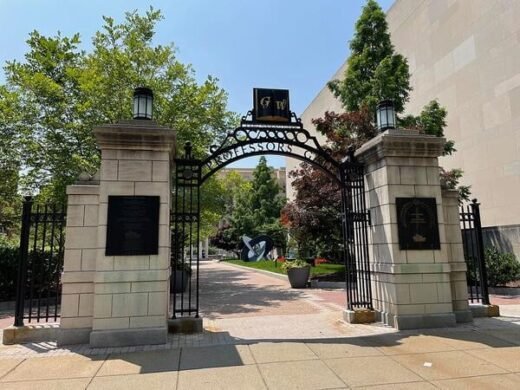
DOJ Finds Racial Discrimination at George Washington Medical
new admin - Aug 28, 2026[ad_1] The Department of Justice said George Washington University violated civil rights law and the 2023 Supreme Court decision barring…