


International Student Arrivals Drop 19%

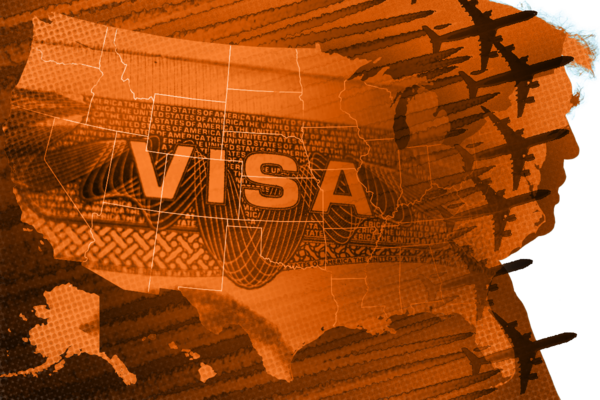
August records of international visitors’ arrivals in the U.S. show 19 percent fewer international students arrived in the country as compared to the same month in 2024, according to a New York Times analysis of the data.
That figure is in line with international enrollment predictions but appears to contradict Department of Homeland Security data released last month.
Experts say that figure doesn’t perfectly represent international enrollment declines, as it leaves out current international students who did not leave the U.S. over the summer. The data also doesn’t capture those who entered the country in September because their institution started later or offered an extension that allowed them to arrive after the start of the semester.
Still, the figure from the National Travel and Tourism Office is one of the more definitive looks so far at how visa delays affected international student enrollment, especially considering the State Department hasn’t released visa-issuance data since May. Most international students arrive in the U.S. in August, shortly before the start of their semesters, making entry data a useful tool for approximating how many students were in the country in time for classes to start.
Since the start of the fall semester, several colleges have reported that fewer international students enrolled in classes, and the arrivals data aligns with those reports and gives a more comprehensive snapshot.
“If we take the entry data as reliable, then I would say it’s not a surprise to anyone in the field that we saw a reduced number of I-94 entries this August. It very much tracks with what we expected based on the unprecedented and, in the view of many in the field, entirely unnecessary freeze on visa interviews that happened during the peak time for visa interview globally,” said Clay Harmon, executive director of the Association of International Enrollment Management. “We’ve heard [all summer] of reduced capacity at key posts around the world even after the freeze was supposed to be lifted.”
On the flip side, data from the database that monitors international students, the Student Exchange and Visitor Information System, released in late September showed an entirely unexpected 0.8 percent increase in international enrollment from September 2024 to September 2025. The data was criticized by NAFSA, the association for international educators, as likely inaccurate; not all institutions had recorded international student enrollment in SEVIS, and many F-1 visa holders likely transitioned to H-1B status on Oct. 1, the organization noted. The Department of Homeland Security also provided the September numbers before the month was even over.
Other experts noted just how sharply that figure conflicts with reports they’re hearing on the ground from institutions. At the same time, Chris Glass, a professor in the Department of Educational Leadership and Higher Education at Boston College who studies international enrollment, postulated in a blog post that the increase is accurate and that the sector might have overestimated the impacts of Trump’s policies.
“This represents a ‘polling error’ equivalent to 2016’s Trump victory predictions—not flawed methodology, but wrong assumptions about the dynamics shaping the new era of internationalization,” he wrote. “We overweighted policy shock (travel bans, visa restrictions) that dominated the headlines and underweighted system resilience that reflect long-term trends.”
Glass also noted that increases in individuals completing optional practical training, which are lumped together with current students in SEVIS data, could be a factor masking enrollment declines. Still, he wrote, it’s unlikely OPT grew enough to mask a 15 percent enrollment decline.
These new data points come after months of uncertainty regarding how a pause in visa appointments and new social media reviews for visa applicants would impact fall international enrollment. Organizations like NAFSA have predicted declines of 15 percent. Experts warn that this drop will likely have huge ricochet effects, not only for universities that will lose tuition revenue and talented students but also for the economies of college towns and the country at large.
The Largest Declines
Analyses of the arrivals data by The New York Times and Shorelight Analytics, an international education firm, show especially stark declines among students from Africa (32 percent fewer than last August), Asia (24 percent) and the Middle East (17 percent). The number of international student arrivals from Europe and Oceania, meanwhile, stayed relatively flat.
Among individual nations, the largest dips came from Iran (86 percent), one of the countries included in Trump’s travel ban that took effect in early June; Syria (62.7 percent); Haiti (57 percent); Ghana (51 percent); Nigeria (47.8 percent); and India (44.5 percent), which is the top source of international students to the U.S. Over 33,000 fewer Indian students arrived in the U.S. this August versus last year. Indian students across the country reportedly struggled to secure visa appointments well into August and beyond, forcing some to defer attendance until the spring or next year.
Ultimately, though, experts think the total declines could amount to even more than the 19 percent reflected in the visitor entry numbers.
Rajika Bhandari, principal of Rajika Bhandari Advisors, an international education research and strategy firm, wrote in an email to Inside Higher Ed that it remains to be seen how many students will actually arrive this academic year.
“While these numbers provide an initial estimate of the drop in international enrollments, the full scale of the declines and resulting impact will be realized only a couple of months down the line,” she added. “The ultimate drop in enrollments could be higher than 20 percent.”
Bhandari also warned that the decreases might be larger in 2026, as prospective students will have had more opportunity to pivot and apply to institutions in other countries.
William Brustein, a longtime international enrollment expert, said that since the onset of visa delays, the Trump administration has only continued to alienate international students and make American higher education less appealing. He specifically pointed out the compact that nine universities were asked to sign that would cap undergraduate international student enrollment at 15 percent.
“The damage that is being done now, and that’s being reflected in these numbers, is irreparable. I really don’t think you can just reverse the course with a finger snap,” he said.
Better insights into fall international enrollment numbers will come in mid-November, when the Institute of International Education, the nonprofit that administers the Fulbright and other international exchange programs, releases its Fall Snapshot report based on institutions’ self-reported data, experts say.
“I think that will be when we all in the field feel like we have a more firm handle on this fall’s enrollment—which, of course, is frustrating, because classes started over a month ago,” said Harmon of the enrollment management association. “But the reality is, it’s so challenging to get solid data.”
You may be interested
Trump considering strikes against Houthis in Yemen after attacks on Saudi Arabia
new admin - Oct 13, 2026President Trump is considering launching U.S. military strikes against the Iran-backed Houthis in Yemen, following a wave of attacks on…

Conjunctivitis: What Is Pink Eye?
new admin - Oct 13, 2026Conjunctivitis — often called pink eye — is inflammation of the conjunctiva in one or both eyes, caused by an…

Information for Young Blood Donors
new admin - Oct 13, 2026Your body loses iron during blood donations. Low iron, also known as iron deficiency, may lead to health problems, such…