




Wild chimpanzees consume the equivalent of 2 cocktails a day in the form of boozy fruit, research finds

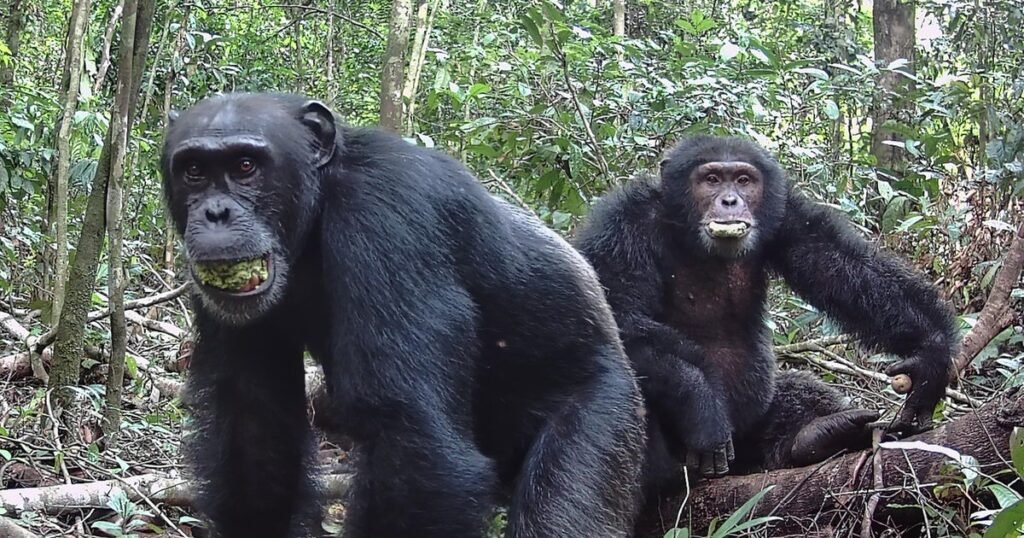
In the forests of Uganda and Côte d’Ivoire, chimps crowd into fig and plum trees, feasting on fruit that’s sweet, soft and just a little boozy. A new study shows those daily snacks quietly add up to the equivalent of nearly two alcoholic beverages for humans.
A team of scientists at University of California Berkeley and other institutions tested the fruit chimps actually snack on: figs in Uganda’s canopy and the plum-like fruits on the forest floor in Côte d’Ivoire. Collecting the data wasn’t easy — with little electricity beyond solar panels and constant humidity threatening the instruments, researchers spent three seasons hauling equipment and calibrating test kits to measure alcohol in many different tropical fruits.
In the end, they found that on average, the fruit’s alcohol content came in at about .3% by weight. This is kombucha-level, but when chimpanzees eat 10 pounds of fruit a day and weigh around 90 pounds, it adds up to about 14 grams of ethanol, equating to about two cocktails for a human.
But don’t picture chimps swinging drunkenly from the trees. To actually get drunk, they’d have to binge on fruit until their bellies ballooned, the researchers said. Instead, they’re exposed to a steady low dose, a quiet buzz from nature’s own fermentation process.
Aleksey Maro/UC Berkeley 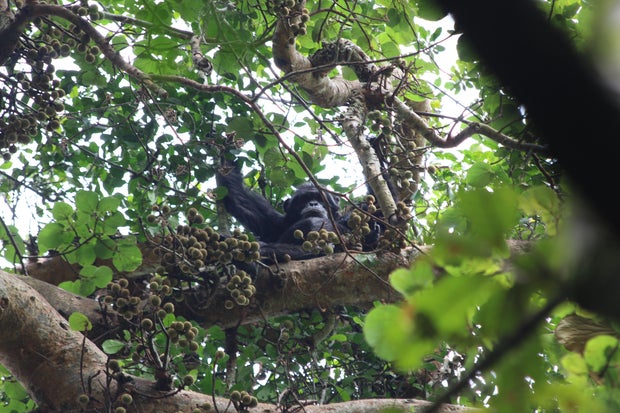
Senior author of the paper and UC Berkeley professor of integrative biology Robert Dudley first floated the “drunken monkey” hypothesis in 2000, arguing that our attraction to alcohol could come from ancestral fruit-eating habits. Dudley argued that it makes sense primates would be tuned to alcohol, since their diets have long revolved around ripe fruit.
“Once you start eating, it acts as an aperitif,” he said. “The pleasure of association with drinking alcohol increases feeding rates.”
Other animals chase the same buzz too.
“Open a bottle of beer outside and a fruit fly appears almost instantly,” Dudley said.
Spider monkeys in Panama, slow lorises in Malaysia and even elephants have been documented consuming naturally fermented fruit or nectar.
What makes this study different is that it provides the first direct chemical measurements of ethanol in the fruits that wild chimps routinely eat, and then connects those numbers to daily intake.
The open question is whether chimps are actually selecting fruit for its alcohol content or just chasing sugar and calories. Either way, Dudley says the story connects to us.
“We inherited the taste for alcohol,” Dudley said. “Even though our diets have diversified … that bias to consume quickly when this molecule is present could still be a powerful force.”
Aleksey Maro/UC Berkeley 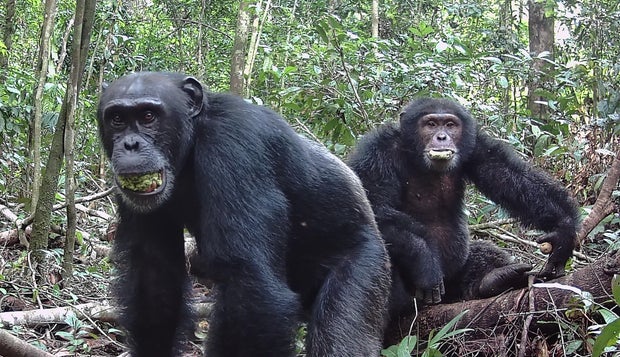
You may be interested

6 Takeaways From International Branch Campus Boom (opinion)
new admin - Feb 04, 2026[ad_1] As the U.S. tightens visa restrictions for international students and slashes research funding—threatening its status as a global innovation…

Ilia Malinin on the pursuit of perfection
new admin - Feb 04, 2026The quad axel is the most difficult skill ever performed in figure skating – and the only person in the…

Marks and Spencer shutting down store in major £17million move
new admin - Feb 04, 2026Marks and Spencer has closed down one of its stores as part of a major £17million move. The retalier has…