



Most College Presidents Worried About New Federal Policies

Nearly 90 percent of college presidents who responded to a recent survey from the American Council on Education were concerned about recent federal policy changes under the Trump administration.
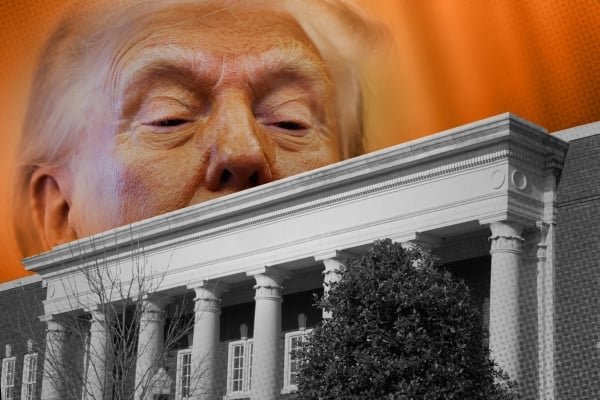
Photo illustration by Justin Morrison/Inside Higher Ed | Anna Moneymaker/Getty Images | DenisTangneyJr/iStock/Getty Images
Nearly three-quarters of college presidents are “extremely concerned” about the implications of the Trump administration and Congress’s new federal policy priorities, according to a survey the American Council on Education published Monday.
ACE surveyed 517 senior leaders—including college presidents, provosts and heads of trade associations—between July 28 and Aug. 8 about their most pressing concerns for the higher education sector. Nearly half (46 percent) said they were most concerned about long-term financial viability; 41 percent said public perceptions about the value of college; 26 percent said upcoming enrollment numbers and student mental health.
The college presidents who responded to the survey also answered additional questions about the impact of executive actions and legislative changes on higher education. Seventy-four percent said they were “extremely concerned,” while 13 percent said they were “moderately concerned.”
Since taking office in January, the Trump administration has terminated billions in federal research funding for universities, targeting programs that focus on now-banned topics such as diversity, equity and inclusion; LGBTQ+ health; and climate change. The administration has also moved to cap indirect research cost reimbursement rates, which universities say would hurt their budgets if it goes into effect.
Already, 29 percent of presidents who responded to the ACE survey said their institutions experienced decreases in revenues; 24 percent said the funding cuts slowed research output due to funding cuts, and 16 percent said the cuts decreased the number of available slots within academic programs.
Presidents also weighed in on the level of their concern over complying with the One Big Beautiful Bill Act, which passed earlier this summer. The bill caps some student loans, eliminates the Grad PLUS program and uses students’ earnings to hold colleges accountable.
Twenty-one percent of presidents indicated extreme concern and 31 percent said they are moderately concerned; just 11 percent said they had no concerns.
“Program-level earnings data: We can’t access it independently, so we can’t get ahead of it,” said one respondent, a president of a private four-year college. “And there’s not a lot we can do to control it except eliminate programs that may be vital to community service but don’t lead to strong earnings.”

You may be interested

Mississippi family faces power outage with no way to follow boil-water advisory
new admin - Feb 04, 2026Mississippi family faces power outage with no way to follow boil-water advisory - CBS News Watch CBS News Across parts…

Federal presence in Bay Area ahead of Super Bowl LX
new admin - Feb 04, 2026Federal presence in Bay Area ahead of Super Bowl LX - CBS News Watch CBS News Some Bay Area residents…

I opened Next’s £25 Valentine’s beauty box worth £101
new admin - Feb 04, 2026[ad_1] The season of love is here, and whether you’re already thinking ahead to February 14 to buy a gift…