



Scholarship, Not Ideology, Guides Civics Curricula


To the editor,
I write in response to Ryan Quinn’s recent article (“The Battle for ‘Viewpoint Diversity’” Sept. 2, 2025) on the new civic center at Utah State University, which mandates general education courses on Western civilization. In his words: “Utah’s Legislature created a civic center at Utah State University committed to ‘viewpoint diversity and civil discourse’ … Those courses must include three that engage with ‘primary texts predominantly from Western civilization,’ such as ancient Israel, Greece or early Christianity. There’s no mention of Islam.”
Well, there’s no mention of Shintoism, Confucianism or Buddhism, either, but I fail to see what’s puzzling about excluding Islam from a “Western civilization” curriculum. Islam’s primary texts played no part in the political construction of the West. Quinn’s implied request is analogous to demanding that a curriculum devoted to Aztec or Inca civilization include the Bible simply because Spain invaded, conquered, subjugated and colonized those societies.
As a matter of civics, the distinction between the Islamic world and the West is foundational and elementary. It is recognized historically and intellectually by all who have studied the West’s construction.
Most Americans—and by extension, our education systems—naturally focus on their own historical and cultural heritage. We’re in the United States; courses here typically reflect what shaped this nation: Greco-Roman republicanism, state Christianity and Enlightenment ideals. People are curious how and why our country got to where it is. If we taught in Iran, China or elsewhere, the focus would reflect their heritage—not ours.
This isn’t a value judgment. It’s just a fact. As odd as it sounds, the United States was conceived as a reactivation of the Roman Republic 1,800 years after it came to an abrupt halt. The Founders live action role played as ancient Romans in their writings. It’s strange, but that’s precisely why it fascinates students. So these texts are not political baggage; they’re intriguing questions of origin and identity.
The question here isn’t moral judgment or wishful thinking. It’s scholarly clarity. Let’s demand substance, not ideology.

You may be interested

U.S. strikes 3 Iranian oil tankers after Iran targets Navy warships, CENTCOM says
new admin - Sep 05, 2026U.S. forces struck three Iranian oil tankers Saturday after Iran launched ballistic missiles toward two U.S. Navy shifts, the U.S.…

The Clash Battled With Hecklers At Their Fifth Gig
new admin - Sep 05, 2026[ad_1] The lucky few who went to London’s Roundhouse on Sept. 5, 1976, had no clue they were about to…
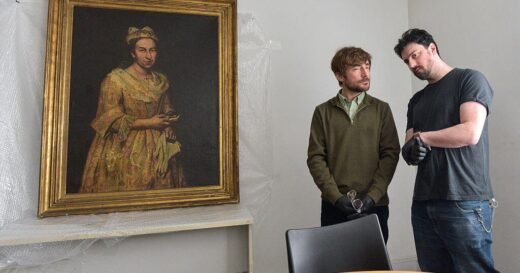
“Portrait of a Lady,” Italian painting looted by Nazis, ordered returned to Jewish collector’s heir
new admin - Sep 05, 2026A 17th-century Italian painting looted by Nazis from a prominent Jewish Dutch art collector must be returned to the rightful…