



How the end of the de minimis tariff exemption is causing unexpected fees for K-beauty products

Mackenzie Knight bought $100 worth of Beauty of Joseon sunscreens and other popular Korean skin care products last month from YesStyle, a major online K-beauty retailer. Five days later, she received an email from global shipping company DHL containing a $20 tariff bill. She had five days to pay up, the notice said, or her order would be returned.
The charge came as a shock, Knight told NBC News, because YesStyle made no mention on its website that consumers would be charged an extra fee as a result of the ending of the de minimis tariff exemption — a loophole for lower-value packages that President Donald Trump’s administration halted last week.
“I feel grateful to be able to afford $20, but it’s not the best to not be expecting it,” said Knight, 35, from San Jose, California. “If people are able to know how much tariffs they’d be charged, a calculator for example, that’d be helpful.”
Beauty junkies obsessed with Korean cleansing oils, snail mucin and sunscreens famously more protective than what are available in the U.S. might want to prepare themselves before they add products to their cart and see the price tick up.
The de minimis provision allowed packages valued at less than $800 to be imported tax-free. These packages will now be charged either the tariff rates the U.S. placed on their countries of origin or fixed fees of $80 to $200, the latter option available only for six months.
South Korea, for example, was subject to a 15% reciprocal tariff starting this summer.

The end of the exemption combined with the recent round of tariffs has shaken the Korean beauty industry, which has experienced a sustained boom in the United States over the past decade.
The U.S. imported an estimated $1.7 billion worth of K-beauty products in 2024, a more than 50% increase from the previous year, according to data from the U.S. International Trade Commission.
While tariffs disrupt global supply chains, the removal of the de minimis provision affects shipments of low-value items such as small electronics and skin care and beauty products, said Munseob Lee, an economist at the University of California San Diego.
In the short run, he said, K-beauty consumers could face “higher prices, fewer varieties and longer delivery times.”
Eliminating the de minimis exemption could cost the average American family up to $136 a year, the heaviest impact falling on low-income and minority consumers who rely on affordable imports, according to a February report from the Yale Economic Growth Center.
Lee said the full impact of the de minimis change on the K-beauty industry may not be clear until next year, as many shoppers and retailers have stocked up on inventory to brace for higher tariff costs.
At the moment, he said, it’s difficult to determine exact price increases because sellers may adopt different strategies to offset costs. Bigger retailers may have the market power to pass on duties to consumers, but smaller brands may have to suspend deliveries to U.S. shoppers, he said.
The impact of global tariffs and ending the de minimis exemption is not limited to the Korean beauty industry. Santiago Vance, who buys Japanese beauty products, said online retailers like Wabi-Sabi and Yoyo Japan have stopped shipping her go-to stem cell serums to the U.S.
“I really am disappointed in how cruel this administration is to normal people,” she said. “We don’t buy a lot. Most of us never even went over the de minimis amount that was there already.”
Congress had planned to remove the tariff exemption for all countries in July 2027, but Trump signed an executive order expediting the end date to Aug. 29. The same day, K-beauty retailer Olive Young imposed a 15% customs duty on all U.S. orders to offset the 15% tax on South Korean imports that went into effect Aug 1.
“We just accepted the reality that this year is going to be one of the most unprofitable years,” said Liah Yoo, a beauty influencer and the founder of the U.S.-based K-beauty brand Krave Beauty.
Because Krave Beauty has a U.S.-based distribution center and doesn’t ship finished products from Korea, Yoo said, the de minimis exemption doesn’t affect her business as much as the direct import tariffs have. Her packaging and operational costs have increased, but Yoo said she’s holding off on hiking prices due to ongoing geopolitical uncertainty.
“The last thing I want to do is increase prices then backtrack because trade policy changed again,” she said. “Hopefully by the end of year there’ll be something more set in stone.”
You may be interested

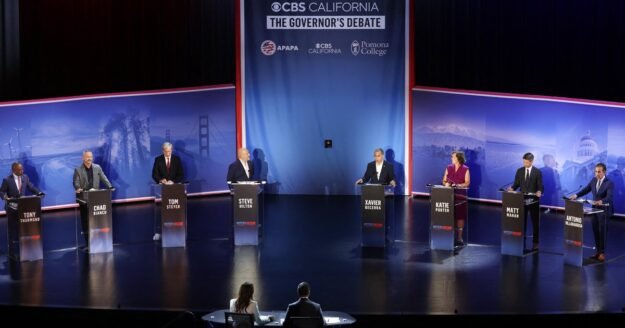
Hilton, Becerra lead California governor’s race as Steyer gains ground
new admin - Jun 05, 2026The race to succeed term-limited Gov. Gavin Newsom in California remained undecided Thursday night, with Republican former Fox News host…

‘Beautiful’ 30% off summer dress is ‘forgiving’ around the tummy area
new admin - Jun 05, 2026Boden shoppers searching for an easy summer outfit may want to take a look at one bestselling dress that's won…

Who’s really at your door? App delivery drivers in California found using accounts that aren’t theirs
new admin - Jun 05, 2026Do you know who you're opening your door to? A CBS News California consumer investigation uncovered food delivery drivers using…