


5 Key Takeaways on Caregiving Students

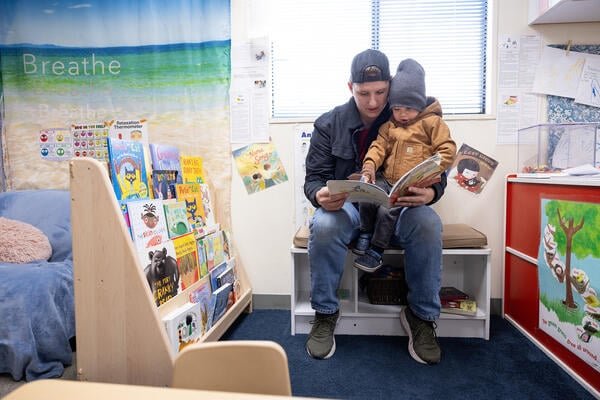
Caregiving students—those who are parenting, caring for other dependents or providing financial support for family members—have become a growing focus for colleges and universities seeking to strengthen the workforce and boost postsecondary attainment amid enrollment declines.
That means addressing their basic needs; caregiving students often balance jobs and family responsibilities, and they experience higher rates of food and housing instability than their peers. Institutions have launched a range of supports, from emergency aid to dedicated staff and wraparound services.
However, new research suggests gaps remain in awareness and access, limiting how effectively caregiving students can use those supports—and, in many cases, whether they can access them at all.
Here are five things Inside Higher Ed has learned about what caregiving students experience—and how colleges and universities can help.
- Older, working and caregiving students face higher food insecurity—and lower persistence—than their peers.
A recent analysis from the Institute for Higher Education Policy, using 2020–22 Beginning Postsecondary Students Longitudinal Study data, found that roughly 19 percent of older students, 15 percent of primarily working students and 21 percent of caregiving students experienced food insecurity during the COVID-19 pandemic, compared to about 11 percent of other students.
Those disparities extended to student outcomes. About 56 percent of older students, 55 percent of primarily working students and 53 percent of caregiving students had either earned a credential or were still enrolled three years after initial enrollment, compared to roughly 73 percent of their peers.
Marián Vargas, assistant director of research at IHEP, said the analysis does not establish a causal link but highlights a gap between the challenges students faced and the support they received.
“We know from prior research that factors such as food insecurity have a big impact on student persistence and completion,” Vargas said. “During the pandemic, when food insecurity was exacerbated, that likely had an impact on persistence.”
- Emergency aid doesn’t always reach students who need it the most.
The same IHEP analysis found that about 26 percent of older students, 25 percent of primarily working students and 29 percent of caregiving students reported receiving emergency financial assistance from their institution during the pandemic, compared to roughly 31 percent of their peers.
Vargas said several factors likely contributed, including complicated application requirements and a lack of awareness that such programs exist.
“If an application is complicated, long or confusing, students with less time may not be able to complete it,” Vargas said. “That’s especially true for students whose time is constrained by caregiving responsibilities or work.”
She also pointed to gaps in awareness. Students who spend less time on campus—such as those attending classes online or working long hours—may be less likely to hear about programs through traditional outreach. “It shows how students with different experiences may not always be reached.”
- Housing insecurity is a significant—and often overlooked—barrier for caregiving students.
A recent New America report, drawing on data from Trellis Strategies’ 2025 Student Financial Wellness Survey of more than 24,000 undergraduates, examined housing challenges facing caregiving students. Among those who moved three or more times in the past year, 46 percent said their most common reason was the need to be closer to school—a finding that reflects the “practical constraints that caregiving students navigate,” the report said.
But affordability and safety also played a role. Roughly 32 percent of respondents said they moved because they couldn’t afford rent, and about 23 percent said they relocated because their living conditions posed a risk to themselves or their families.
Allyson Cornett, director of research at Trellis Strategies, said housing insecurity has lagged behind other basic needs issues in garnering robust institutional responses, particularly for students of color.
“We see that housing insecurity among caregiving students is widespread, racialized and fundamentally misunderstood,” Cornett said. “It’s not just about whether students have housing, but whether that housing is affordable, safe and stable enough for both their education and their families.”
- Awareness of housing-related financial assistance remains low, and access is limited even for those who seek help.
The same New America report highlighted a widespread lack of awareness of available housing assistance: Roughly 73 percent of caregiving students said they didn’t know they could seek additional institutional support for housing costs.
And among those who sought help, few received it. Just 3 percent reported both requesting and receiving additional housing aid, while another 4 percent said they applied but were denied.
Richard Davis, policy analyst at New America, said the gap is especially consequential given how little financial cushion many caregiving students have.
“When it comes to [caregiving students], most of them can’t cover a short-term emergency of up to $500,” Davis said. “Many housing challenges stem from things like security deposits, falling behind on utility bills or coming up short on rent. Being able to provide short-term assistance for students—particularly caregiving students—is really important.”
- Childcare access is a significant obstacle for parenting students.
A recent report from California Competes finds that parents raising young children face some of the steepest barriers to enrolling in and completing college. Among California residents ages 25 to 54 without a college degree, 42 percent have a child under 18, totaling about 2.7 million people statewide. In the Bay Area, more than 100,000 adults with dependents who intend to enroll cited childcare as a significant obstacle to doing so.
Su Jin Jez, chief executive officer of California Competes, said Bay Area parents without degrees earn about $33,765 annually, compared to $106,190 for those with degrees. Meanwhile, childcare costs average roughly $49,800 per year for families with young children—underscoring the financial challenge of returning to college.
“You have more mouths to feed, you’re housing more people,” Jez said. “College already feels very unaffordable for so many Californians, so when you add on [childcare] costs, it becomes even more out of reach.”
Taken together, the research suggests that better support isn’t just about expanding services, it’s about proactively building relationships to ensure caregiving students know those resources exist and can actually access them while balancing work and family responsibilities. That, in turn, is key not only to enrolling caregiving students, but also to helping them complete college.
Get more content like this directly to your inbox. Subscribe here.
You may be interested

Patriots Super Bowl champion Jordan Devey dies by suicide, family says
new admin - Jul 25, 2026[ad_1] NEWYou can now listen to Fox News articles! This story discusses suicide. If you or someone you know is…

Google basically confirms the Pixel 11 is getting a price hike
new admin - Jul 25, 2026Google’s Vice President of Devices and Services, Shakil Barkat, all but confirmed in an interview with 9to5 Google that its…

4th firefighter dies from burn injuries battling Colorado’s Knowles wildfire
new admin - Jul 25, 2026A fourth firefighter died from burn injuries battling Colorado's Knowles wildfire in the western part of the state at the…