


25 states sue Trump administration over latest round of tariffs

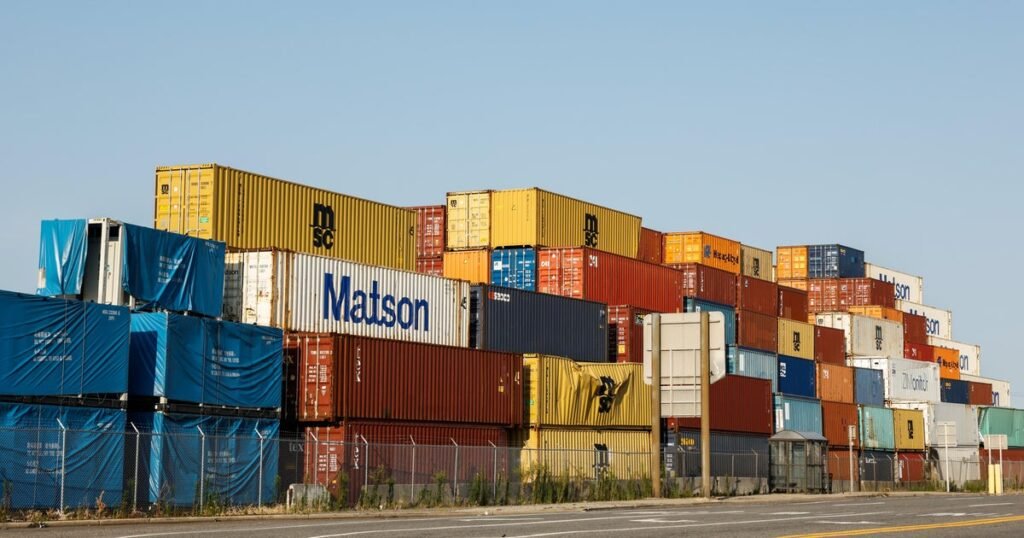
A coalition of 25 states on Monday filed a lawsuit against the Trump administration, alleging that it exceeded its authority in imposing a new round of sweeping tariffs last month.
The import duties, enacted under Section 301 of the Trade Act of 1974, target 60 economies with rates ranging from 10% to 12.5%.
“This is President Trump’s third attempt to illegally impose tariffs that would make life more expensive for American families and small businesses, and this is the third time we’re taking the administration to court over this misuse of power,” California Attorney General Rob Bonta said in a statement announcing the lawsuit.
Section 301 authorizes a U.S. president to impose tariffs and other sanctions on countries found to engage in unfair trade practices. U.S. trading partners haven’t done enough to crack down on imports produced with forced labor, the Trump administration said in announcing the new levies.
A White House spokesman on Monday defended the president’s tariff policies.
“The United States is using its lawful authority to obtain the elimination of unreasonable acts, policies and practices that burden U.S. commerce,” White House spokesman Kush Desai said in a statement to CBS News. “A foreign country’s failure to impose and effectively enforce a prohibition on the importation of goods produced with forced labor is unreasonable and burdens U.S. commerce, including American workers, and must be addressed. Section 301 tariffs have proven to be a legally durable tool since the president’s first term, and they remain so now.”
“Tariffs are taxes”
The states’ lawsuit, filed in the U.S. Court of International Trade, alleges that the tariffs are not designed to address forced labor, but rather are an effort by the White House to replace levies that the Supreme Court struck down in February. The states also argue that an investigation led by the Office of the U.S. Trade Representative to set the stepped-up tariffs was rushed and overly broad in hiking the levies.
“Tariffs are taxes, and the American people cannot and should not shoulder the extra costs that come from the president’s failed and illegal economic policy — no matter how much the President wants them to,” Bonta said.
Joining California in the suit were Arizona, Colorado, Connecticut, Delaware, Hawaii, Illinois, Kentucky, Massachusetts, Maryland, Maine, Michigan, Minnesota, Nevada, New Jersey, New Mexico, New York, North Carolina, Oregon, Pennsylvania, Rhode Island, Virginia, Vermont, Washington and Wisconsin.
Although U.S. tariff rates have fallen this year, the levies remain an important part of the White House’s trade policies. Mr. Trump has said tariffs are necessary to revive U.S. manufacturing, reduce the nation’s trade deficit and generate federal revenue.
The U.S. effective tariff rate has fallen this year to 7.4%, from 9.4%, after the Trump administration replaced temporary Section 122 duties with Section 301 tariffs on imports from 60 economies, according to Fitch Ratings.
You may be interested

A cut cable disrupted hundreds of flights across the US
new admin - Sep 22, 2026A JetBlue airplane past an FAA air traffic control tower at Philadelphia International Airport (PHL) in Philadelphia, Pennsylvania, US, on…
Where things stand with 6 weeks until midterm elections
new admin - Sep 22, 2026Where things stand with 6 weeks until midterm elections - CBS News Watch CBS News Just six weeks remain until…

Amazon wants to help the Colorado River, but we still don’t know how much water the company uses
new admin - Sep 21, 2026Amazon plans to spend $20 million on water conservation projects along the Colorado River, a crucial but dwindling water supply…